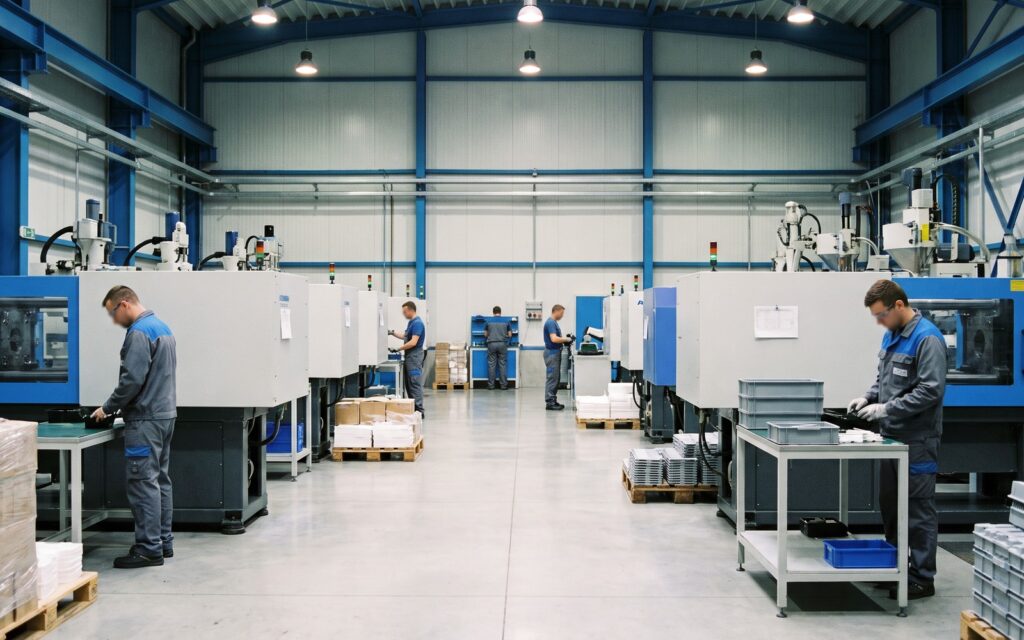
Injection products are important components used in the healthcare sector and various industrial applications. The production of these products requires high precision and meticulousness. Establishing a turnkey injection manufacturing factory involves not only constructing a physical facility but also encompasses quality management systems, regulatory compliance, validation, and audit preparations. In this guide, we will address the process of setting up an injection manufacturing factory, its requirements, and the key points to consider.
Industries and Products Covered
Injection manufacturing factories are commonly used in highly regulated sectors, especially in human pharmaceuticals, veterinary medicines, biotechnological products, and medical devices. The product forms include injectable solutions, suspensions, emulsions, and lyophilized products. These types of products are typically produced under sterile conditions; therefore, the manufacturing facilities must comply with GMP (Good Manufacturing Practices) standards.
Injection Manufacturing Factory Setup Process
The setup process of an injection manufacturing factory consists of several critical steps. Firstly, feasibility studies and project planning should be conducted. This phase includes determining the facility’s capacity, layout, and necessary equipment. Next, construction and infrastructure work begins. During this process, the establishment of sterile areas, HVAC systems, and other required equipment is carried out.
Another significant step is to ensure the establishment of a quality management system and compliance with GMP. This begins with the qualification and validation of production processes and equipment. Validation is necessary to guarantee the consistency and quality of production processes. Additionally, training for personnel and the development of operational procedures are carried out in this phase.
Finally, it is essential to prepare the facility for audits. This means preparing for internal audits and audits conducted by regulatory bodies. Ensuring that the facility complies with all regulations reduces investment risks and increases production reliability.
Requirements and Standards
When establishing injection manufacturing facilities, there are many standards and requirements to adhere to. GMP standards form the foundation of such facilities. GMP ensures that the production processes comply with quality and safety standards. Furthermore, other quality management systems, such as HACCP (Hazard Analysis and Critical Control Points), can also be implemented.
Regulatory compliance is critical, especially in the pharmaceutical and medical device industries. Therefore, manufacturing facilities must comply with the relevant legal requirements. This includes licensing processes, product registrations, and quality control procedures.
Cost and Time Management
The setup costs for an injection manufacturing factory can vary based on numerous factors. The size of the facility, its capacity, the equipment and technologies used have a direct impact on costs. Additionally, regulatory compliance and the establishment of quality management systems also affect expenses.
The setup duration can vary depending on the complexity of the project. Generally, after the feasibility studies and project planning, construction and infrastructure work can take several months. Qualification and validation processes can extend this timeline.
Common Mistakes and Important Considerations
Common mistakes made while establishing injection manufacturing facilities include insufficient planning and feasibility studies, neglecting regulatory requirements, and incomplete establishment of quality management systems. These errors can reduce the efficiency of the facility and increase investment costs.
Another important point to consider is staff training. Qualified and experienced personnel ensure that production processes are carried out effectively and reliably. Additionally, continuous improvements and updates can enhance the competitiveness of the facility.
In establishing an injection manufacturing factory, proper planning and a coherent approach are critical for achieving a successful outcome. At this point, Turnkey Production Facility services offer significant advantages for investors.
Injectable manufacturing factory: step-by-step production process
The steps below summarise the typical workflow we follow in injectable manufacturing factory projects. In every project the sequence is adapted to the product portfolio and the capacity target.
- Defining the product and sterilisation strategy: the first decision is whether terminal sterilisation is possible or aseptic processing is required.
- Solution preparation: compounding and mixing in preparation tanks using water for injection (WFI).
- Filtration: the solution passes through suitable filters to reduce bioburden and sterilise it, with filter integrity testing.
- Component preparation: vials or ampoules are washed, dried and depyrogenated in a tunnel; stoppers and caps are prepared.
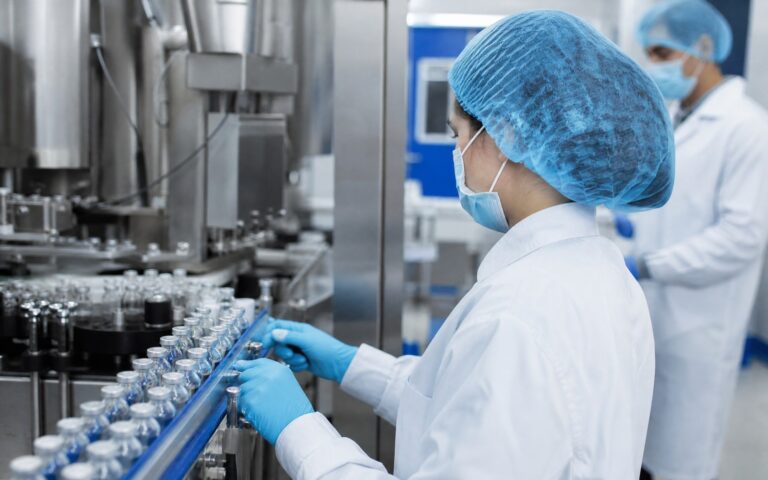
- Aseptic filling and closing: filling takes place under Grade A conditions in a RABS or isolator.
- Terminal sterilisation (where suitable) and lyophilisation (where required).
- Visual inspection, container closure integrity testing, labelling and QA batch release.
Key equipment and systems
Equipment is selected according to the formulation, target capacity, level of automation and cleaning validation requirements. A typical facility includes the following main groups:
- Purified water and WFI generation and distribution systems, pure steam generator
- Stainless steel compounding and holding vessels
- Sterile filtration units and filter integrity testers
- Vial/ampoule washing machine and depyrogenation tunnel
- Aseptic filling and closing line within a RABS or isolator
- Autoclave and, where needed, freeze dryer
- Visual inspection and leak testing equipment; environmental monitoring system
GMP and regulatory notes
Sterile products are the most tightly regulated area of pharmaceutical manufacturing. The facility needs a manufacturing authorisation and GMP certification from the national competent authority. The core design reference is EU GMP Annex 1 (Manufacture of Sterile Medicinal Products): cleanroom grades A to D, the contamination control strategy, aseptic process simulation (media fills) and environmental monitoring are planned in line with it. Export markets such as the US also require compliance with FDA expectations.
How is the project timeline planned?
Installation time depends on variables such as whether the building is ready, lead times for imported equipment, cleanroom requirements and the workload of licensing authorities. Rather than quoting a fixed duration, we split the project into clear phases and define the deliverable of each one:
- Feasibility and definition of the product portfolio
- Concept and detailed engineering (layout, personnel and material flows, HVAC and process water)
- Equipment procurement and construction works
- Installation, commissioning and qualification (DQ, IQ, OQ, PQ)
- Process validation, documentation and licensing
- Staff training and transition to commercial production
When work that can run in parallel (for example equipment orders and construction) is planned correctly, the overall schedule shortens noticeably. The critical path is usually long-lead equipment and official approvals.
Factors that drive the cost
Every investment budget is different; the items below have the greatest impact on total cost:
- Aseptic filling versus terminal sterilisation: aseptic processing and isolator technology raise investment considerably
- Cleanroom area and the volume of Grade A/B space
- Capacity of WFI and pure steam systems
- Need for lyophilisation
- Scope of qualification and validation, including media fills
- Number of formats: vials, ampoules, cartridges or prefilled syringes
At Envora we quantify these items for your specific project during the feasibility stage and also evaluate options for phasing the investment.
Frequently Asked Questions
Should we choose a RABS or an isolator?
Both provide Grade A conditions consistent with EU GMP Annex 1. An isolator separates the operator from the product environment more effectively and may allow a lower background cleanroom grade, while a RABS can be more flexible in some situations. The choice depends on the product, capacity and changeover frequency.
What is a media fill?
A validation study in which the aseptic filling process is simulated with growth medium. It demonstrates that the process is robust against contamination and must be repeated periodically by aseptic manufacturers.
Does Envora offer turnkey installation?
Yes. We can manage the entire process under one contract, from feasibility, concept and detailed engineering to equipment supply, installation, qualification and staff training. Consulting-only or engineering-only packages are also available.
Can an existing building be converted into a production facility?
In most cases it can. We assess ceiling height, floor load capacity, utilities and the space available for personnel and material flows on site, and then decide together whether refurbishment or a new building is the better option.
Contact our team to have your project assessed and to receive a roadmap tailored to you. You can find the details of our scope on the Human, Veterinary and Traditional Herbal Medicine Production page.
Related guides: How to Set Up a Traditional Herbal Medicine Facility?, How to Set Up a Liquid Pharmaceutical Facility? and How to Establish Veterinary Drug Manufacturing Facilities?.