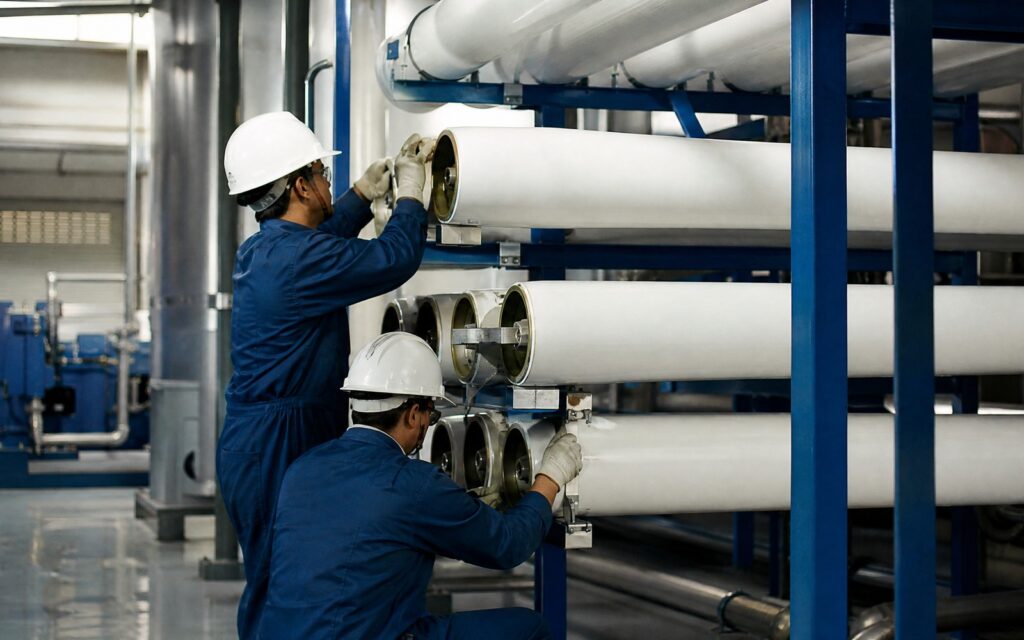
Seawater reverse osmosis (SWRO) modules are systems used to convert seawater into drinking water. Proper installation of these systems is critical for their effective and efficient operation. The steps and requirements to be considered during the installation process are important for achieving a successful outcome.
You can review the services we provide, from design to commissioning, on our Seawater Treatment Systems page.
Sectors and Products Covered
Seawater reverse osmosis modules are widely used in sectors such as coastal settlements, hotels, resorts, and ships. They are also preferred in specialized areas like oil platforms, military bases, and the maritime industry. These systems are suitable for various applications, including the production of drinking water, industrial process water, and agricultural irrigation water. The quality of the produced water can vary depending on the design of the modules and the technologies used. For example, modules used for drinking water production are designed to meet high-quality standards.
Installation Process of Seawater Reverse Osmosis Modules
The installation process requires careful planning and engineering. The first step is to determine the needs and accurately calculate the capacity of the system. Factors such as the flow rate of the seawater to be treated and the desired water quality should be considered at this stage. For example, the daily water needs and quality of water for a hotel should be determined.
The next step is to select the appropriate modules. Factors such as the capacity of the system, energy consumption, and cost are evaluated in the selection of modules. Then, the area where the modules will be placed must be prepared, and the infrastructure must be established. At this stage, the installation of pipelines, pumps, and other auxiliary equipment is carried out. Proper placement of the pipelines is vital for the efficient operation of the system.
After the installation processes are completed, the system moves to the commissioning phase. At this stage, it is tested whether all components are functioning correctly. PLC-based systems are used for the automation and control of the system. These systems ensure that the system operates efficiently during operation. The commissioning process is a critical step for verifying the performance of the system.
Requirements and Standards
There are various standards and requirements that must be adhered to during the installation of seawater reverse osmosis modules. First and foremost, the installation of the system must comply with local regulations and environmental regulations. Additionally, the system’s energy efficiency and compliance with water quality standards must also be ensured. For example, European Union water quality standards can serve as a fundamental reference for drinking water production.
It is important that the equipment and materials used during installation have quality certificates. These certificates guarantee that the system will operate safely and lastingly. Furthermore, a plan for regular maintenance and inspection of the system must also be established. This plan is a critical tool for continuously monitoring the system’s performance and detecting potential issues in advance.
Cost and Duration
The installation of seawater reverse osmosis modules should be evaluated in terms of investment costs and operating costs. Installation costs can vary depending on the capacity of the system, the technology used, and local conditions. Generally, the installation of large-scale systems results in higher costs. For example, the cost of a system installed for a resort may differ from that installed for a ship.
The duration of installation varies depending on the size and complexity of the project. Small-scale projects can be completed in a few months, while large-scale projects may take a year or longer. This duration should be considered during project planning, and necessary resources should be planned in advance. Especially for large projects, it is important to manage supply chain and logistics processes well.
Common Mistakes and Considerations
Common mistakes made during the installation of seawater reverse osmosis modules can negatively affect the effectiveness and efficiency of the system. There are some points to consider to avoid these mistakes. First, inadequate planning and engineering can lead to incorrect calculations of the system’s capacity. This situation can result in the system not providing the desired performance. For example, incorrect calculation of water flow can cause the system to be insufficient.
Additionally, inappropriate selection of modules and equipment can increase energy consumption and raise operating costs. Moreover, mistakes made during the commissioning of the system can lead to problems during operation. Therefore, it is important to seek support from experienced engineers and technicians during the installation process. An experienced team can detect potential issues in advance and provide solutions.
Successful installation of seawater reverse osmosis modules requires proper planning, engineering, and careful implementation. Mistakes made during the installation process can negatively impact the efficiency and longevity of the system. Therefore, careful and meticulous work should be carried out at every stage. Especially, tests and controls conducted during the commissioning of the system ensure the safe and efficient operation of the system in the long term.
Example Scenario: SWRO Installation in a Resort
Installing a seawater reverse osmosis system for a resort can be an effective solution to meet water needs. First, the daily water consumption of the resort is calculated, and a system is designed with an appropriate capacity. Then, suitable modules are selected, and the area where they will be placed is prepared. During this process, it is important to ensure compliance with the water quality standards of the resort.
After the installation is completed, the system moves to the commissioning and testing phase. At this stage, all components of the system are checked, and necessary adjustments are made. To continuously meet the water needs of the resort, regular maintenance and monitoring of the system are required. This scenario provides a concrete example of how the installation process of seawater reverse osmosis modules works.
Checklist: Considerations Before and After Installation
- Needs Analysis: The capacity and water quality requirements of the system to be installed should be accurately determined.
- Module Selection: The most suitable modules should be selected in terms of energy efficiency and cost.
- Infrastructure Preparation: The installation of pipelines and pumps should be carried out carefully.
- Testing and Commissioning: It should be ensured that all system components are functioning correctly.
- Maintenance Plan: A regular maintenance plan should be established to monitor system performance and detect issues in advance.
Comparison: SWRO and Other Treatment Systems
Seawater reverse osmosis systems offer certain advantages and disadvantages compared to other water treatment systems. For example, reverse osmosis systems effectively remove high salt concentrations but can be more costly in terms of energy consumption. In contrast, other methods like distillation may be more energy-efficient but are slower processes. Therefore, when deciding which system to use, the characteristics of the water source and needs should be taken into account.
Related guides: High Pressure Pumps and Energy Recovery Systems Installation, How to Build an Intake Structure and Pre-Protection? and Steps for Feed Seawater Analysis and Process Design.