
Seawater Treatment Systems
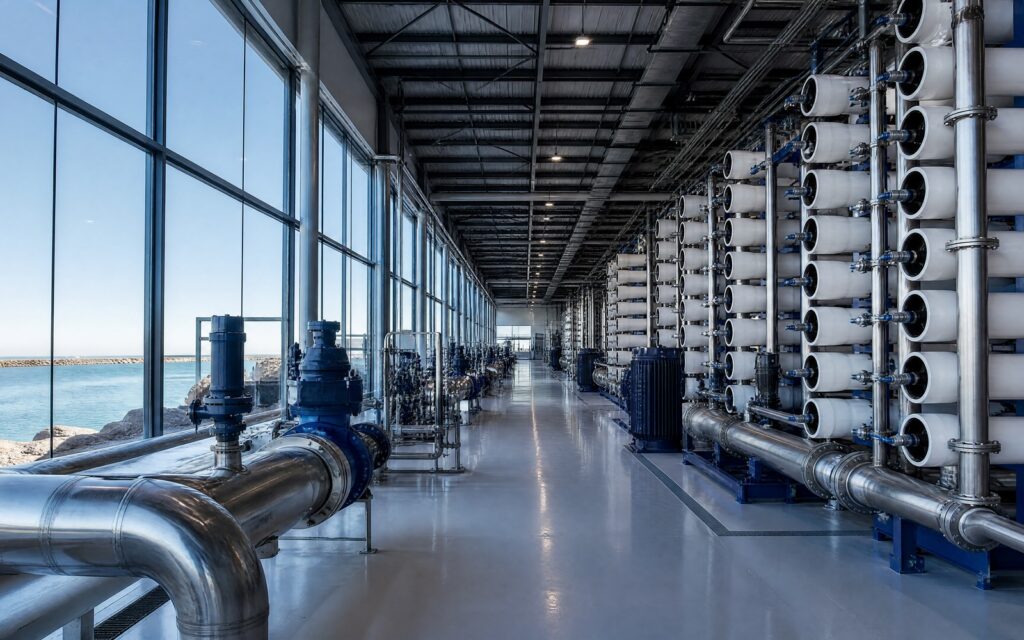
Envora Global provides turnkey engineering services in seawater treatment systems, including seawater analysis, pretreatment design, seawater reverse osmosis (SWRO) process design, energy recovery integration, mechanical-electrical planning, automation/SCADA, field assembly, and commissioning. Projects consider water quality targets, energy efficiency, membrane lifespan, brine discharge management, and operational continuity as fundamental design criteria, thereby providing reliable, sustainable, and economical seawater treatment solutions for coastal industrial facilities, hotels, islands, and municipalities.
Coastal areas with limited freshwater sources, industrial facilities, hotels, islands, and campuses have transformed seawater drinking and process water production into a strategic infrastructure need. High salinity, variable water quality, biological contamination, and energy costs; make seawater treatment projects much more critical than standard drinking water projects. Envora Global offers turnkey solutions covering process design, engineering, equipment selection, automation, field assembly, and commissioning stages of seawater treatment systems, primarily seawater reverse osmosis (SWRO). Our goal is to establish seawater treatment plants that are reliable, energy-efficient, and sustainable with low operating costs.
Seawater treatment systems require advanced process engineering and proper pretreatment due to high salinity (especially NaCl), total dissolved solids (TDS), biological pollution (algae, plankton, bacteria), and contamination (fouling/scaling) risks. The most common technology, Seawater Reverse Osmosis (SWRO), can lead to serious issues such as rapid membrane fouling, high energy consumption, and low system reliability if not designed correctly.
The project begins with the analysis of the feed seawater. Depending on the water intake point (shore intake, open sea intake, well type seawater intake, etc.), parameters such as turbidity, SDI (Contamination Index), TDS, temperature, biological load, and organic matter concentrations are determined. This data serves as essential inputs for pretreatment design, membrane selection, high-pressure pump design, and energy recovery equipment.
During the pretreatment stage; mechanical screens, sand catchers, disc or drum filters, DAF, multimedia filters, cartridge filters, or ultrafiltration systems are used to reduce the turbidity and SDI value of the water reaching the membranes. The aim is to minimize membrane fouling and ensure stable, long-lasting operation of the reverse osmosis system.
In the reverse osmosis stage, high-pressure pumps and SWRO membranes are engaged to overcome the osmotic pressure of seawater. At this point, Envora Global optimizes the system’s specific energy consumption (kWh/m³) by integrating energy recovery devices (ERPs) into the process design. This reduces operating costs and increases the energy efficiency of the project.
RO product water is typically low in minerals and aggressive, so it undergoes remineralization, pH correction, and disinfection steps. This protects the piping and equipment while ensuring balanced water that meets drinking water standards. In process water applications, different conditioning scenarios can be applied based on desired conductivity and hardness targets.
Another critical issue in seawater treatment plants is the management of brine discharge and environmental impacts. Envora Global designs the brine line to be compatible with environmental regulations, discharge points (sea depth, currents, mixing zones), and other infrastructures on site such as refineries, power plants, and industrial facilities. When necessary, mixing/dilution strategies, diffuser designs, and discharge modeling are evaluated.
On the electrical and automation side, seawater treatment plants are designed as PLC/SCADA based, fully automated systems. Feed pumps, backwash cycles, membrane cleaning (CIP) processes, chemical dosing systems, and brine discharge pump stations are managed under automation. All critical parameters (pressure, flow rate, conductivity, SDI, tank levels, energy consumption, etc.) are monitored, logged, and reported via SCADA.
In addition to establishing new seawater treatment plants, Envora Global also provides services for capacity enhancement, energy optimization, membrane exchange strategies, pretreatment revisions, and automation modernization in existing SWRO facilities. This aims to ensure sustainable performance throughout the entire lifecycle of the plant.
Feed Seawater Analysis and Process Design
-
Parameters such as TDS, salinity, SDI, turbidity, temperature, and biological load are analyzed.
/li>
-
Taking into account seasonal fluctuations, algal blooms (red tide), and storm periods, design is made according to the worst-case scenario.
/li>
Water Intake Structure and Preliminary Protection
-
Open sea intake, coastal intake, or well-type (beach well) solutions are selected based on the project.
/li>
-
Grids, sand catchers, and initial filtration prevent the entry of large particles and marine life into the system.
/li>
Pre-treatment (Filtration, DAF, Ultrafiltration)
-
Multimedia filters, disk filters, DAF, and/or ultrafiltration bring the pre-membrane water quality to the desired level.
/li>
-
In the design, the requirements for sand filter backwash water, chemical consumption, and maintenance cycles are taken into account.
/li>
Seawater Reverse Osmosis (SWRO) Modules
- Membrane pressure, configuration (1–2 pass), recovery rate, and pipe flow rates are calculated according to the project.
- The chemical program (antiscalant, biocide, CIP chemicals) is planned based on the risk of fouling and scaling.
High-Pressure Pumps and Energy Recovery Systems
- High-pressure pumps are selected considering the efficiency class and operating range.
- Specific energy consumption of the system is minimized with solutions such as isobaric energy recovery devices.
Remineralization, pH Adjustment, and Disinfection
- RO product water is remineralized with calcite filters, lime/soda dosing, or carbon dioxide.
- Drinking/process water standards are ensured through pH adjustment and disinfection (chlorine, chlorine dioxide, UV).
Brine Management and Environmental Impact Assessment
- A pipeline, diffuser, mixing zone, and environmental effects are calculated for saline wastewater discharge.
- If necessary, brine is diluted with other flows or integrated into reuse scenarios (for example, cooling water).
Packaged and Modular Seawater Treatment Systems
- Container-type modular SWRO system solutions are offered for islands, hotels, campuses, or remote locations.
- The modular structure provides flexibility for rapid installation, portability, and capacity increase.
Automation, SCADA, and Remote Monitoring
- The entire process is designed to be monitored through PLC control and SCADA.
- Energy consumption, conductivity, flow rate, and pressure trends are recorded for performance analysis and optimization.
Operation, Maintenance, and Membrane Management
- Membrane fouling curves, CIP periods, and chemical consumption are regularly monitored.
- Continuity of pumps, filters, chemical dosing equipment, and instruments is ensured through planned maintenance programs.
- Envora Global offers operational support, operator training, and process optimization services.
Sık Sorulan Sorular
In which applications is the seawater treatment system used?
Seawater treatment systems are used for drinking water and process water production for coastal industrial facilities, power plants, hotels, resorts, islands, ports, campuses, and municipalities.
What is the typical energy consumption of a seawater treatment facility?
Consumption varies depending on design, salinity, pre-treatment structure, and energy recovery technology, but specific energy consumption in modern SWRO systems can be optimized to competitive levels. Envora Global prioritizes equipment and process selections to minimize this value at the design stage.
Can the treated water be used as drinking water?
Yes. After appropriate remineralization, pH adjustment, and disinfection steps, water can be conditioned to meet the relevant drinking water standards. The target water quality is defined accordingly at the beginning of the project.
What is the lifespan of membranes?
With proper pre-treatment, suitable chemical programs, and regular CIP applications, membranes can generally be used efficiently for several years. Water quality, operational discipline, and process design directly affect membrane lifespan.
How does variability in seawater affect the system?
Changes in turbidity, temperature, and biological load particularly affect pre-treatment performance and membrane fouling rates. Therefore, the design takes seasonal fluctuations and deterioration scenarios into account; the automation system is also configured to respond flexibly to these changes.
Does salty wastewater (brine) harm the environment?
With well-designed brine discharge systems, salinity increases are diluted in a controlled manner, and environmental effects are minimized. Envora Global determines the discharge point, flow rate, and diffuser design according to environmental regulations and local conditions.
My existing SWRO facility has high energy costs, what can you do?
Specific energy consumption can be reduced by modernizing energy recovery systems, improving pump and motor efficiency classes, and re-optimizing process pressures and flows. Envora Global develops energy optimization projects for existing facilities.
Can the system operate fully automatically?
Yes. Seawater treatment plants can be designed to operate fully automatically with PLC/SCADA infrastructure. The operator performs only monitoring, chemical preparation, and periodic maintenance tasks; process start/stop, backwashing, CIP, and alarm management are handled through automation.
What is the installation time for a seawater treatment facility?
The duration varies depending on the project's capacity, usage of modular/package systems, site conditions, and scope of construction. The design-manufacturing-assembly-commissioning processes are planned with a project-based timeline. In modular container systems, durations can be significantly shortened.
Request a Quote for Your Project
Our expert team is ready to provide tailored solutions for your needs.
Get in TouchOur catalogs
You can check our catalogs for detailed information about our products and services.
Related Guides
Guides on setup, costs and regulations
-
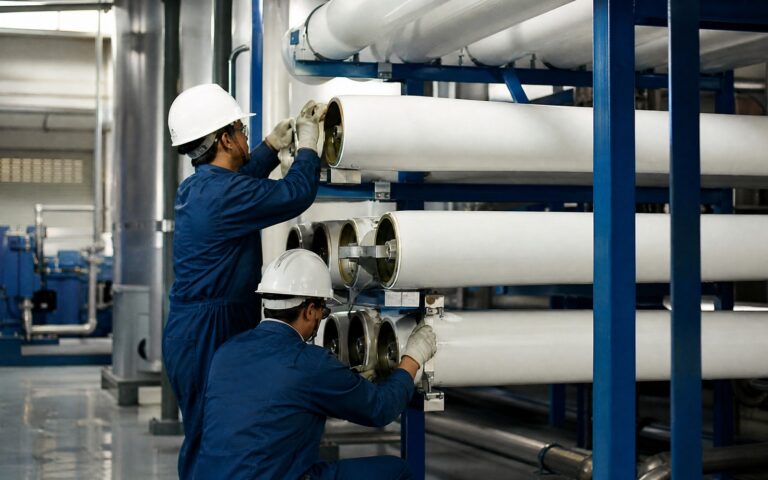 How to Install Seawater Reverse Osmosis (SWRO) Modules?
A detailed guide on the assembly and commissioning of seawater reverse osmosis (SWRO) modules. Explore the installation processes…
Read more
-
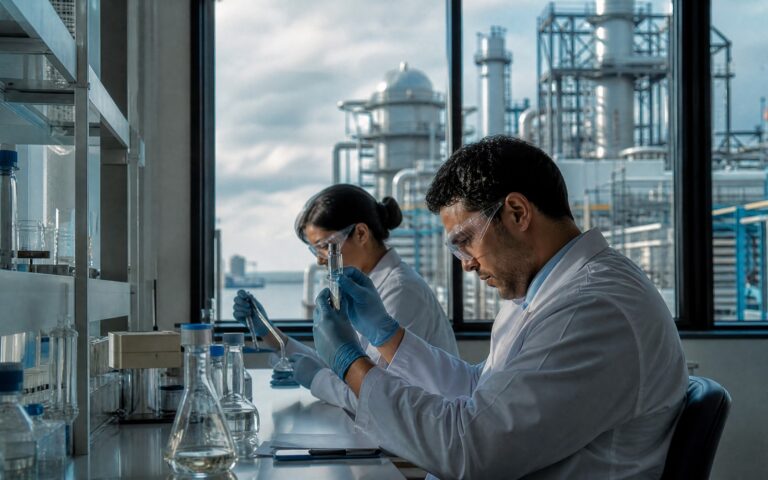 Steps for Feed Seawater Analysis and Process Design
Learn step by step how feed water analysis and process design are carried out in seawater treatment plants.…
Read more
-
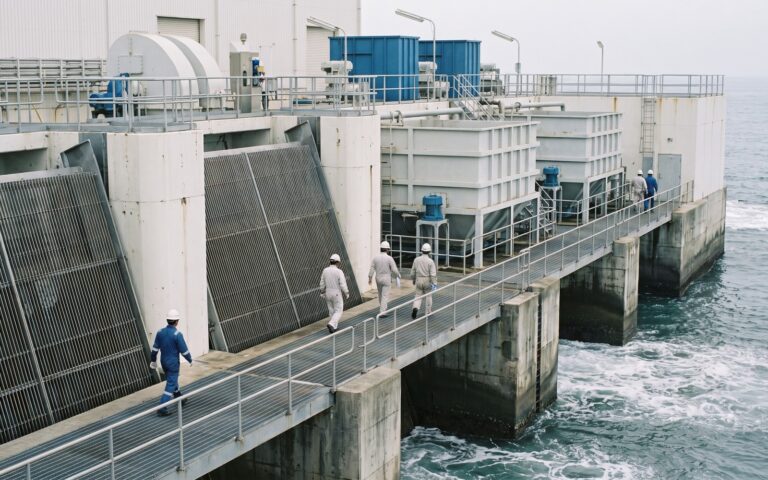 How to Build an Intake Structure and Pre-Protection?
How is the intake structure and pre-protection implemented in seawater treatment systems? Which sectors use these systems? What…
Read more
-
 How to Establish an Injection Manufacturing Factory?
A detailed guide on the steps to consider in setting up an injection manufacturing factory, compliance standards, and…
Read more