Establishing a pet food production factory is an important step for businesses considering entering this field. This process can yield successful results when managed with proper planning and a skilled team. In this guide, we will detail the setup of a pet food production factory, quality control processes, and regulatory compliance.
You can review the services we provide, from design to commissioning, on our Food & Beverage Sector page.
Sectors and Products Covered
Pet food production factories are essential for the pet food industry. This sector produces products for various animal types, such as dog food, cat food, bird feed, and fish feed. Product forms include different types such as dry food, wet food, canned food, and treat biscuits. These products are produced with special formulas to meet the nutritional needs of pets.
Factory Setup Process
The setup process of a pet food production factory generally consists of several stages. First, a suitable location must be selected. This is determined based on factors such as logistical conveniences, access to raw materials, and proximity to the market. The second stage involves the design and construction of the facility. During this stage, production capacity, machine layout, and workflow efficiency should be considered.
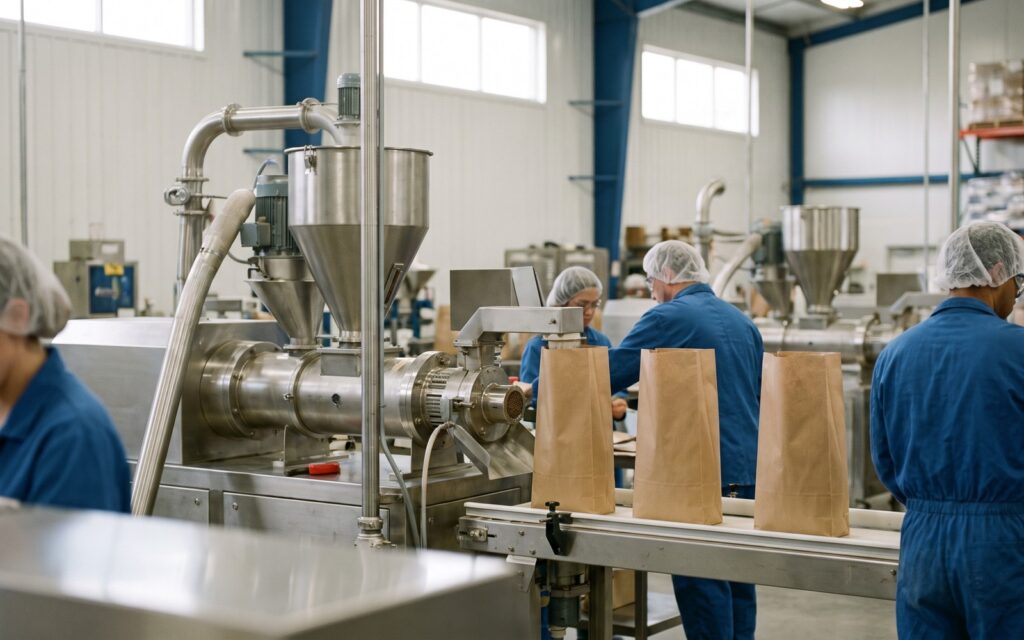
The third stage concerns the selection and installation of production equipment. Here, suitable machines must be selected and installed for each product type. Extruders may be required for dry food production, while canning machines or mixers may be necessary for wet food. It is also important to integrate quality control mechanisms at every stage of the production line. This ensures the quality of the final product.
The fourth stage is the establishment of quality control and laboratory facilities. Quality control is crucial at every stage of the production process. Therefore, a laboratory should be established, and necessary testing equipment should be procured. Quality control processes are critical to ensure the nutritional values, hygiene standards, and regulatory compliance of the products.
The final stage involves staff training and the establishment of operational procedures. Staff must be trained in production processes, quality control, and safety standards. Additionally, operational procedures and emergency plans should be created. This is necessary for the smooth operation of the production process and to prevent potential disruptions.
Regulations and Requirements
There are a number of regulations and standards that must be adhered to in pet food production. Among these, HACCP (Hazard Analysis and Critical Control Points) and GMP (Good Manufacturing Practices) standards stand out. These standards are critical for ensuring product safety and quality.
The production facility must comply with local and international regulations. For example, in the European Union, there are specific labeling and content requirements for pet food. Therefore, compliance with these regulations must be ensured at every stage of the production process.
Additionally, an environmental impact assessment should be conducted, and environmentally friendly production methods should be adopted. Issues such as waste management, energy conservation, and optimizing water usage should also be considered. This is important for both legal compliance and sustainability.
Costs and Timeline
The costs of setting up a pet food production factory can vary depending on the size of the facility, production capacity, and technology used. Generally, it may require a high initial capital investment, but it offers a sustainable business model in the long run. A comprehensive feasibility study should be conducted to accurately estimate costs. This is an important factor affecting the return on investment and profitability.
The setup time similarly varies depending on the complexity of the facility and the preparation phase. Typically, the planning and construction phases can take several months, but this duration may be extended due to local permitting processes and supply chain factors. Proper planning of the timeline is critical for the success of the project.
Common Mistakes and Considerations
One of the common mistakes in setting up a pet food production factory is inadequate planning and research. Choosing the wrong location for the facility can lead to logistical and cost issues. Additionally, neglecting regulatory compliance can result in serious legal problems. This can lead to both financial losses and damage to brand reputation.
Another common mistake is making incorrect choices in equipment selection. Machines that are not suitable for the production capacity can reduce efficiency and increase costs. Therefore, equipment selection should be made carefully, considering future production goals. Maintenance and repair processes for the equipment should also be planned to ensure uninterrupted production.
Finally, neglecting staff training and safety standards can affect both production quality and lead to workplace safety issues. Therefore, continuous training programs and strict safety procedures should be implemented. Additionally, staff motivation and job satisfaction should be enhanced to make production processes more efficient.
Related guides: How to Set Up Food Coloring Production Facilities?, How to Set Up a Cocoa Powder Production Facility? and How to Set Up a Baby Food Production Factory?.