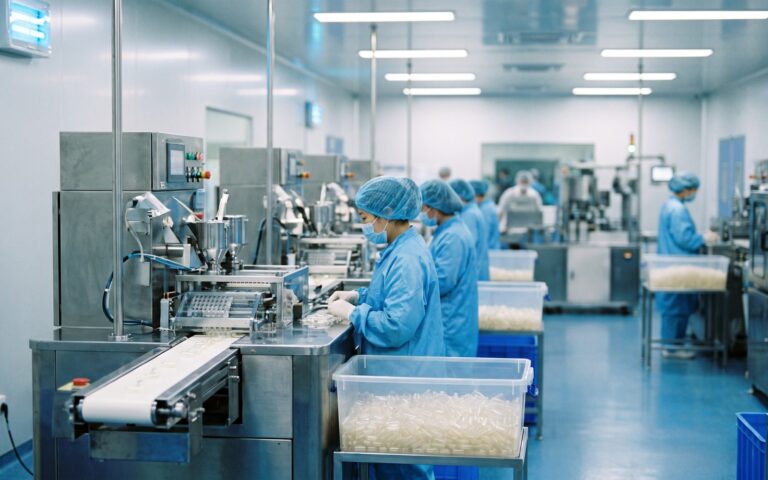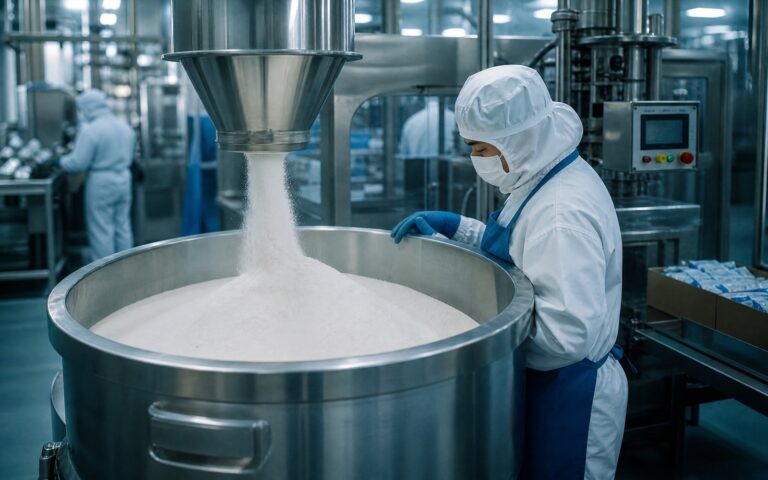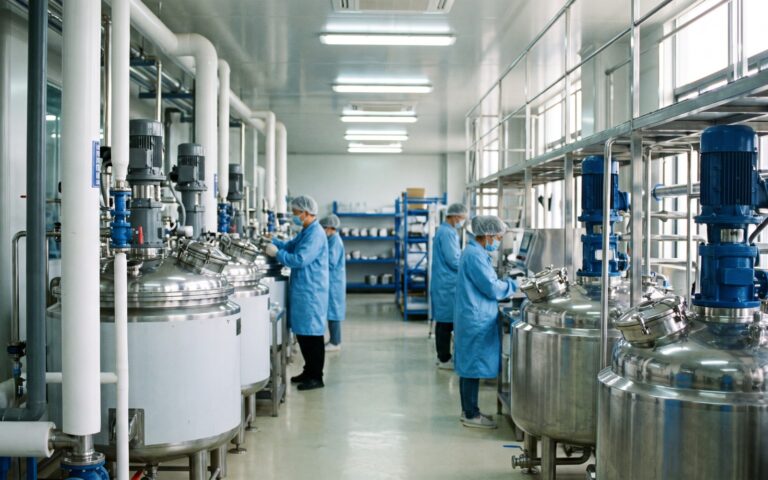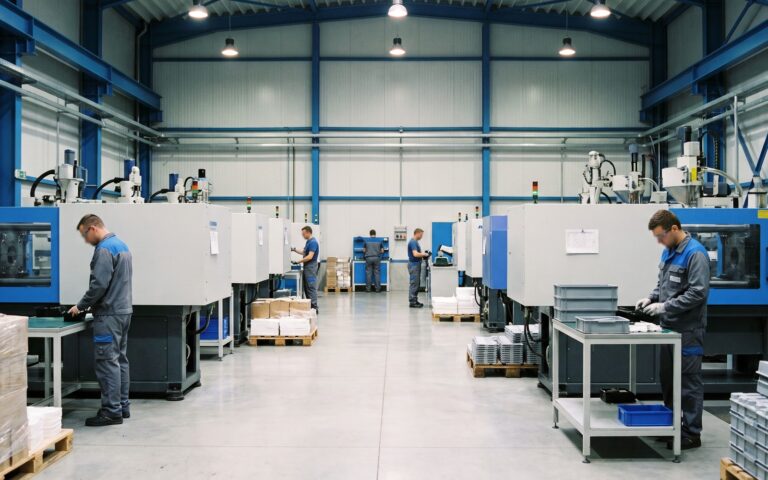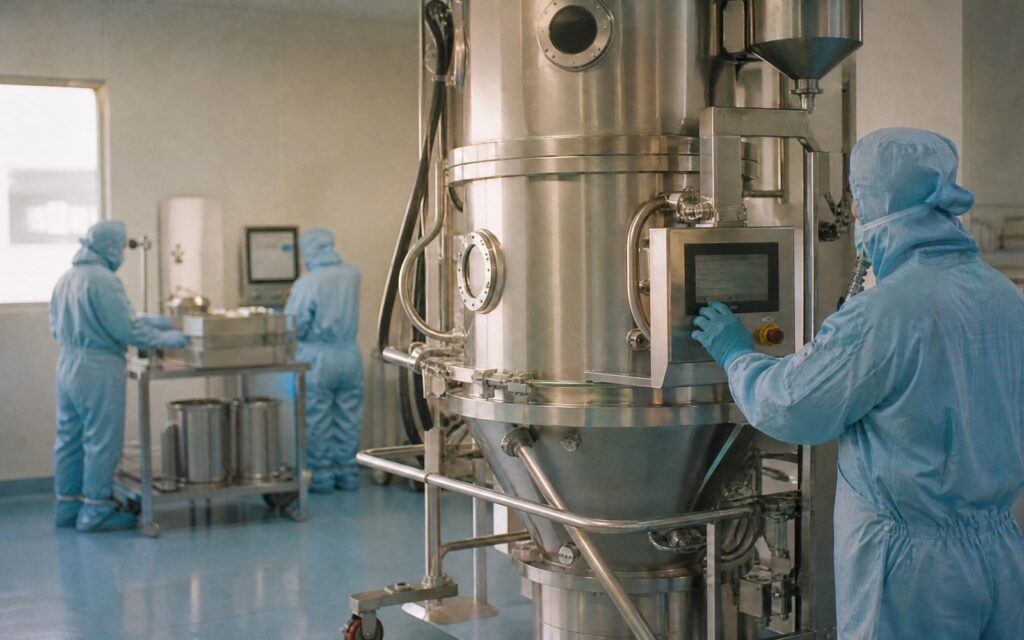
Granule production facilities hold significant importance, especially in the pharmaceutical and food supplement sectors. The setup of these facilities requires careful planning and implementation that encompasses all stages of the production processes, beyond just creating a physical structure. Turnkey production facilities provide great convenience to investors in this context. However, the establishment of such facilities must be meticulously planned according to specific processes and requirements.
You can review the services we provide, from design to commissioning, on our Human, Veterinary and Traditional Herbal Medicine Production page.
Sectors and Products Covered
Granule production facilities are generally used in the following sectors and product forms:
- Pharmaceutical Sector: Production of drugs in tablet, capsule, and powder form.
- Food Supplement Sector: Granule form supplements containing vitamins and minerals.
- Veterinary Products: Granule form medications for animal health.
- Chemistry and Agriculture: Fertilizers and chemical substances.
Setup Process of Granule Production Facilities
The setup of granule production facilities requires the meticulous execution of specific steps. This process is critical for investors to achieve their goals.
1. Needs Analysis and Feasibility Studies
Before starting the facility setup, a comprehensive needs analysis must be conducted. This analysis includes factors such as production capacity, product diversity, and target market. Subsequently, feasibility studies assess whether the investment is economically sustainable.
2. Facility Design and Planning
During the design phase, the efficiency of the production line and compliance with GMP (Good Manufacturing Practices) standards must be considered. At this stage, the Turnkey Production Facilities service provides significant convenience for investors.
3. Equipment Selection and Placement
The selection of equipment to be used in the production process is extremely important for product quality and production capacity. Equipment placement should be done in a way that optimizes the flow of the production process.
4. Installation and Assembly
The installation and assembly of equipment should be carried out by expert teams. During this process, it must be ensured that all systems operate in an integrated manner.
5. Validation and Qualification
Validation and qualification processes should be conducted to verify that the facility and equipment operate in accordance with the established standards. This phase is particularly critical for GMP compliance.
Requirements and Standards
During the setup of granule production facilities, compliance with certain standards and regulations must be ensured. These requirements are essential for the facility to operate reliably and sustainably.
GMP and HACCP Compliant Production
Granule production facilities must comply with international standards such as GMP and HACCP. These standards ensure product quality and consumer safety.
Quality Management Systems
An effective quality management system should be established in the facilities. This system ensures that production processes are kept under control and continuously improved.
Cost and Duration Analysis
The setup of granule production facilities requires a significant investment. Therefore, cost analysis must be conducted carefully. The installation duration may vary depending on the size and complexity of the facility.
CAPEX and OPEX Evaluation
Initial investment (CAPEX) and operating costs (OPEX) should be carefully evaluated for the economic sustainability of the facility. Good planning helps keep costs under control.
Installation Duration
The installation duration of granule production facilities typically ranges from 12 to 18 months. This period can be optimized through project management and supply chain planning.
Common Mistakes and Considerations
Common mistakes encountered during the setup of granule production facilities can lead to delays in the process and increased costs. There are some important points to consider to avoid these mistakes.
Inadequate Planning
Inadequate or faulty planning can lead to delays and cost overruns in the installation process. Good planning ensures that the entire process proceeds smoothly.
Non-Compliance with Regulations
A facility that does not comply with regulations can lead to serious legal issues and product recalls. Therefore, compliance must be maintained throughout the entire process.
Errors in Equipment Selection
Incorrect equipment selection can negatively affect production efficiency. It is important that the equipment is suitable for production needs and equipped with up-to-date technology.
Related guides: How to Set Up Tablet Coating Production Facilities?, How to Set Up a Tablet Manufacturing Factory? and How to Establish an Injection Manufacturing Factory?.