
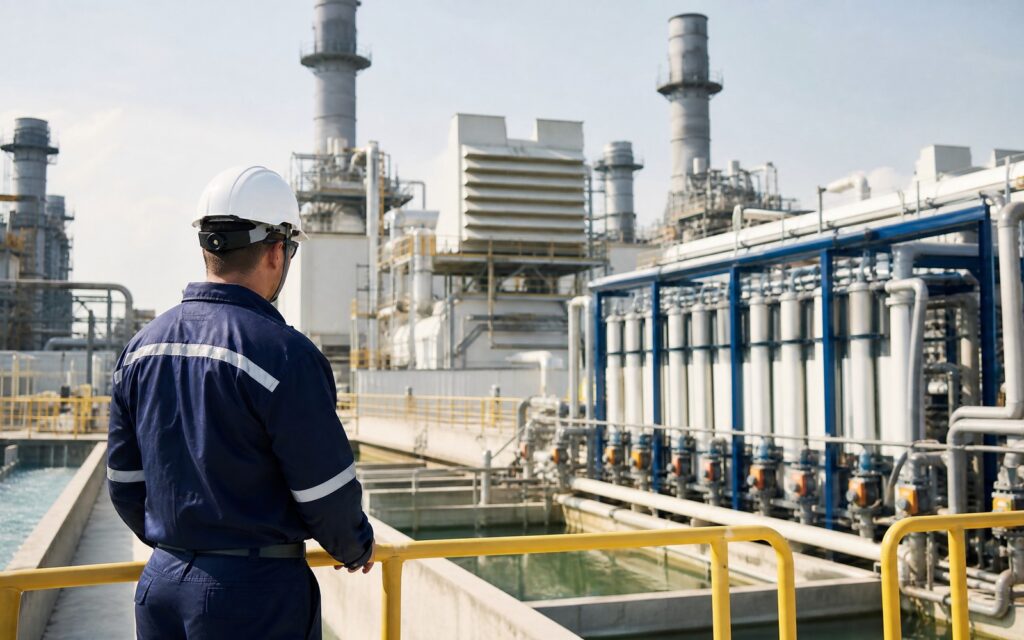
Combined Cycle Power Plants (Natural Gas) Solutions
Water treatment and discharge solutions for combined cycle power plants. Water management is critical to increase efficiency in energy production.
Get free consulting for your Combined Cycle Power Plants (Natural Gas) project
Combined cycle power plants are one of the most critical players in the energy sector. These plants, which use natural gas, provide high efficiency in electricity generation while also playing a significant role in water treatment and management. For the plants to operate efficiently, the water must be treated and discharged correctly. In this field, companies offering water treatment solutions for combined cycle power plants are making the energy production process more sustainable.
Many institutions and companies operate in the combined cycle power plants industry. These include energy companies, natural gas suppliers, electricity generation firms, engineering companies, water treatment and infrastructure companies, environmental consultancy firms, industrial equipment suppliers, project management companies, maintenance and repair service firms, energy consultancy firms, and public services. Each one contributes to the efficient and environmentally friendly operation of combined cycle power plants by specializing in different areas of the energy sector.
Combined cycle power plants can enhance sustainability in energy production with water treatment systems. These systems increase the quality of the water needed by the plant, extending the lifespan of equipment and improving the efficiency of the energy production process. High-quality water minimizes problems like scaling and corrosion in turbines and boilers, which lowers maintenance costs in the long run. Additionally, water treatment solutions reduce the environmental impact of the plant.
Wastewater management is another important issue for combined cycle power plants. Proper management of the wastewater generated in the plants is critical for compliance with environmental regulations. At this point, treating wastewater and safely discharging it contributes to the plant’s both environmental and operational sustainability. Advanced wastewater treatment systems help minimize the plant’s environmental impact while also aiding in the conservation of water resources.
Water recovery systems enable the reuse of water in combined cycle power plants. These systems recover a significant portion of the used water, thus reducing water consumption and enhancing environmental sustainability. Water recovery also lowers the plant’s operating costs, as less new water needs to be sourced. Such systems allow plants to use water resources more efficiently and minimize their environmental impact.
The water treatment systems used in combined cycle power plants can be customized according to different needs. For example, special ion exchange systems or membrane filtration technologies can be used to reduce the hardness of water. Such solutions are designed to meet the specific water quality requirements of the plant. Additionally, chemical dosing systems can be implemented to maintain the pH balance of water and prevent corrosion.
- Water softening systems
- Ion exchange systems
- Membrane filtration technologies
- Chemical dosing systems
- Wastewater treatment plants
- Water recovery systems
- Discharge management systems
- Energy efficiency optimization
- Environmental impact assessment services
- Water quality monitoring systems
- Maintenance and repair services
- Project management and consultancy services
- Environmentally friendly technologies
- Water resources management
Combined cycle power plants are subject to various regulations to ensure high efficiency in energy production and low environmental impact. These regulations aim to minimize the plants’ effects on the environment and increase the importance of water treatment systems. By using advanced water treatment and wastewater management systems to comply with these regulations, plants can increase their operational efficiency while fulfilling their environmental obligations.
Example Project Scenario
The establishment of a water treatment and recovery system project for a combined cycle power plant is an important step for effective water management. Within the scope of this project, the plant’s water treatment needs are determined, and special solutions are developed. Below, you can see the step-by-step flow of such a project:
- Needs analysis and water quality assessment
- Design of special water treatment systems
- Integration of membrane and ion exchange technologies
- Establishment of wastewater treatment systems
- Implementation of water recovery systems
- Optimization of chemical dosing systems
- Environmental impact assessment and approval processes
- Employee training and system commissioning
Water and wastewater management for combined cycle power plants is a critical component in enhancing the sustainability of the energy production process. With the right solutions, plants can increase their operational efficiency and fulfill their environmental obligations. In this process, it is possible to implement the most suitable solutions by collaborating with expert teams. Contact us to discover the best water treatment and management solutions for your combined cycle power plants.
How We Can Help
Water Softening System Project for Combined Cycle Power Plant
Water softening systems designed to meet the plant's water needs and extend equipment life. Prevents scaling and increases efficiency.
Installation of Ion Exchange Systems
Integration of ion exchange systems to reduce water hardness and increase purity. Optimizes plant operations.
Application of Membrane Filtration Technologies
Use of membrane filtration technologies to obtain high-quality water. Effectively removes micro-pollutants.
Wastewater Treatment Plant Project
Advanced treatment plants to ensure environmentally compliant wastewater discharge. Fully complies with environmental regulations.
Integration of Water Recovery System
Recovery systems that increase environmental sustainability by reducing water consumption at the plant. Lowers operational costs.
Optimization of Chemical Dosing Systems
Optimization of chemical dosing systems to maintain water's pH balance and prevent corrosion.
Environmental Impact Assessment Project
Evaluation of the environmental impacts of water treatment and discharge processes and improvement studies.
Online Water Quality Monitoring System
Monitoring systems developed to continuously monitor water quality and optimize it with real-time data.
Energy Efficiency Optimization Project
Projects that optimize the water treatment processes of the plant focusing on energy efficiency.
Water Treatment Project Management Services
Management and consultancy throughout all phases of water treatment projects for combined cycle power plants.
Water Treatment Systems Maintenance Project
Comprehensive services for the regular maintenance and repair of water treatment systems.
Eco-Friendly Water Treatment Solutions
Eco-friendly and sustainable water treatment technologies for combined cycle power plants.
Which of these solutions fits your Combined Cycle Power Plants (Natural Gas) project?
Get a free initial assessment and we'll identify the right solution for your project. We reply within 24 hours.
Frequently Asked Questions
How long do water treatment projects take for combined cycle power plants?
The project duration varies depending on the size and needs of the plant. Generally, it can take several months along with detailed planning and implementation phases.
What is the cost of water treatment systems?
The cost varies depending on the technology to be used and the capacities of the systems. A project-specific assessment is conducted to clarify the cost.
How do we start water treatment projects?
The first step is to determine the water treatment needs of the plant. This starts with a detailed analysis conducted by an expert team, followed by developing customized solutions.
What advantages do water recovery systems provide?
These systems reduce water consumption, increase environmental sustainability, and lower operational costs. Additionally, they minimize environmental impacts.
What regulations do water treatment systems comply with?
Water treatment systems fully comply with environmental regulations. This is crucial for minimizing the environmental impacts of the plant.
Why are chemical dosing systems important?
Chemical dosing systems are used to maintain the pH balance of the water and prevent corrosion. This extends the life of the equipment and increases efficiency.
How do water quality monitoring systems work?
These systems provide real-time data by continuously monitoring water quality. This data is used to optimize the quality of the water and improve operational efficiency.
How is the maintenance of water treatment systems carried out?
Regular maintenance is necessary to ensure the efficient operation of systems. This includes routine checks and repairs conducted by expert teams when needed.
What are environmental impact assessment projects?
These projects analyze the environmental impacts of water treatment and discharge processes and provide improvement recommendations. Thus, the plant's impact on the environment is minimized.
Request a Quote for Your Project
Our experts are ready to design a solution around your requirements.
Contact Get in Touch Our projects →Related Services
Related Guides
Guides on setup, costs and regulations
-
 How to Set Up a Supplement Production Facility for Energy?
A comprehensive guide on the setup process, requirements, costs, and common mistakes for establishing a supplement production facility…
Read more
-
 How to Establish an Energy Drink Production Factory?
What are the steps and requirements to consider when establishing an energy drink production factory? How can you…
Read more
-
 High Pressure Pumps and Energy Recovery Systems Installation
Installation steps for energy-efficient systems and the integration of high pressure pumps with energy recovery systems in drinking…
Read more
-
 How to Build an Intake Structure and Pre-Protection?
How is the intake structure and pre-protection implemented in seawater treatment systems? Which sectors use these systems? What…
Read more