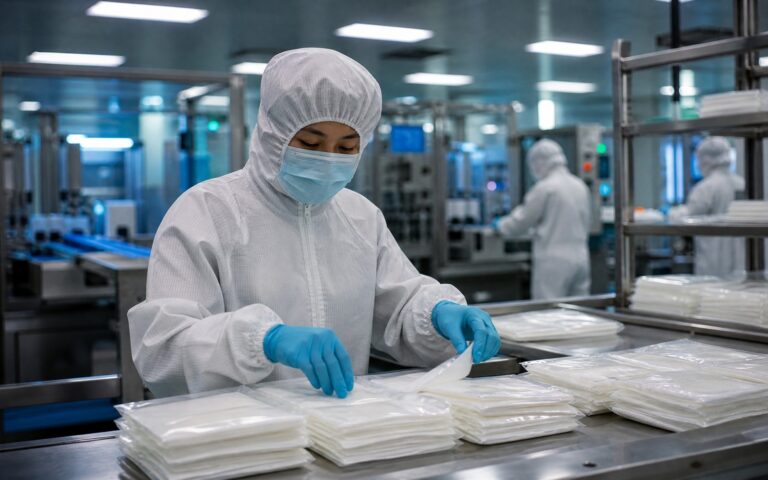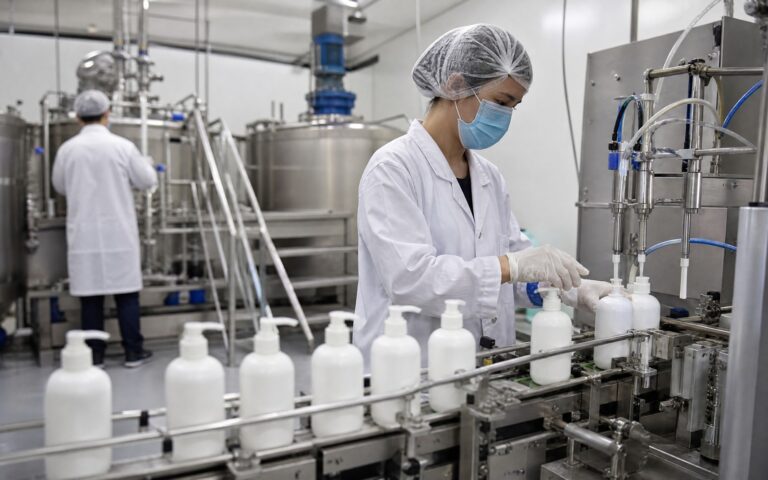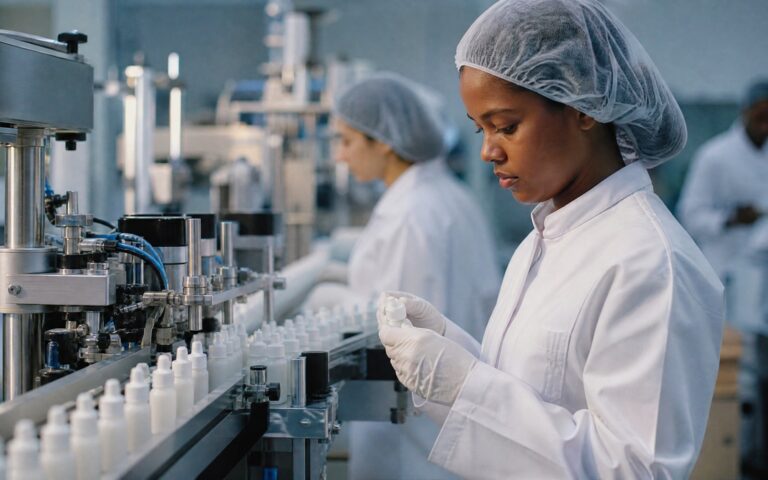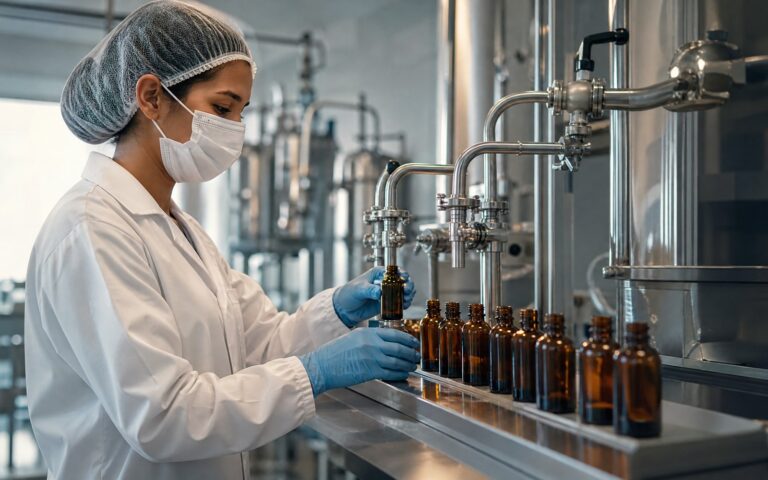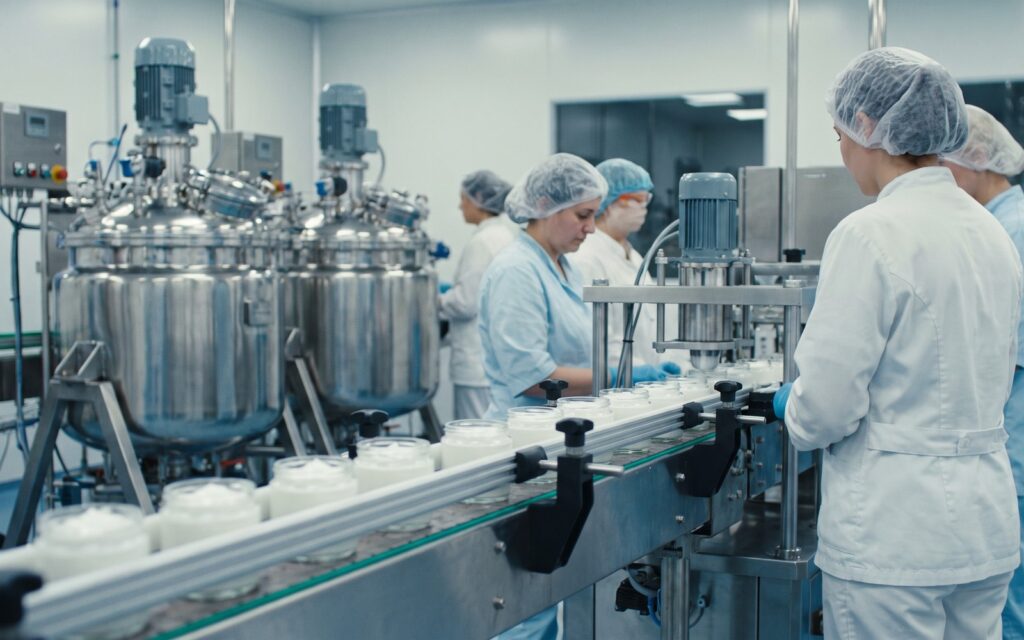
For entrepreneurs and businesses looking to enter the cosmetic industry, the proper establishment of manufacturing facilities is vital. With the right planning and implementation, a cosmetic manufacturing factory can achieve success in both efficiency and quality. In this guide, we will examine the necessary steps for establishing a cosmetic manufacturing factory, industry requirements, and cost analyses.
Industries and Products Covered
Cosmetic manufacturing facilities serve various sectors such as personal care, dermocosmetics, and hotel amenities. The products produced in these facilities include liquid cosmetic products such as lotions, shampoos, liquid soaps, toners, and serums. Additionally, semi-solid products like creams, masks, and peels are also produced in these facilities.
Establishment Process
The establishment process of a cosmetic manufacturing factory consists of several critical steps. First, the location and design of the facility must be determined. At this stage, the size of the facility, production capacity, and logistical requirements should be considered. In the second step, necessary permits must be obtained, and a structure compliant with regulations must be established. Cosmetic manufacturing facilities must comply with international standards such as GMP (Good Manufacturing Practices) and HACCP (Hazard Analysis Critical Control Points).
In the third step, the equipment and technology infrastructure of the facility must be established. Here, machines, laboratory equipment, and automation systems necessary for the efficiency of production lines and quality control processes should be procured. In the fourth step, the integration of quality management systems must be ensured. This is critical for the traceability and continuous improvement of production processes.
Requirements and Standards
During the establishment of cosmetic manufacturing facilities, certain requirements must be met. First, compliance with GMP standards must be ensured. These standards guarantee that products are produced safely and with quality. Additionally, the establishment of HACCP systems is important for preventing potential risks in production processes.
Regulatory compliance is another important requirement. Compliance with local and international regulations is necessary for fulfilling legal obligations and enhancing export opportunities. Furthermore, adherence to environmental and social responsibility standards should also be considered.
Cost and Duration Analysis
The establishment costs of a cosmetic manufacturing factory vary depending on the size of the facility, production capacity, and technology used. Generally, initial costs include land and building investments, equipment purchases, and permit fees. Operating costs cover raw materials, energy, labor, and maintenance expenses.
The duration of establishment can vary depending on the scope of the project and preparation phases. Typically, the establishment of a cosmetic manufacturing facility can be completed within 12 to 24 months. This period includes project management, construction, equipment installation, and validation processes.
Common Mistakes
One of the common mistakes made during the establishment of a cosmetic manufacturing factory is starting the project without sufficient research and planning. This can lead to increased costs and wasted time. Additionally, deficiencies in regulatory compliance can lead to the suspension of the facility’s operations. Another common mistake is the inadequacy of quality management systems. This can result in decreased product quality and customer dissatisfaction.
To prevent these issues, it is important to adopt a professional approach by utilizing Turnkey Manufacturing Facilities services. This ensures more effective management of processes and helps minimize potential risks.
Cosmetic manufacturing factory: step-by-step production process
The steps below summarise the typical workflow we follow in cosmetic manufacturing factory projects. In every project the sequence is adapted to the product portfolio and the capacity target.
- Portfolio and formulation review: product groups such as creams, lotions, shampoos and serums, their volumes and filling formats are defined.
- Raw material receipt and quarantine: incoming materials are held in a separate area until sampled and released.
- Weighing and dispensing: accurate weighing per formula, ideally with barcode or ERP verification.
- Phase preparation and emulsification: water and oil phases are heated, mixed in a vacuum homogeniser and cooled under control.
- In-process control: viscosity, pH, appearance and microbiological tests are used to release the bulk.
- Filling, capping and labelling: products are filled on lines suited to tubes, bottles or jars, and batch number and expiry date are printed.
- Finished product control and release: after quality assurance approval the product is prepared for dispatch.
Key equipment and systems
Equipment is selected according to the formulation, target capacity, level of automation and cleaning validation requirements. A typical facility includes the following main groups:
- Process vessels with vacuum homogenisers and heating/cooling jackets
- Mixing tanks and transfer pumps for liquid products
- Purified water system (RO, EDI and distribution loop)
- Tube, bottle and jar filling and capping machines
- Labelling, coding and cartoning equipment
- Quality control laboratory: pH meter, viscometer, stability chambers, microbiology equipment
- CIP/cleaning systems and HVAC-controlled production areas
GMP and regulatory notes
In the EU, cosmetics are governed by Regulation (EC) No 1223/2009, which requires a responsible person, a product information file, a safety assessment and notification through the CPNP before products are placed on the market. On the manufacturing side, ISO 22716 (Cosmetics Good Manufacturing Practices) is the reference standard, so layout, cleaning, documentation and traceability should be designed around it. If you plan to export to the US or other markets, their requirements should be considered at the design stage.
How is the project timeline planned?
Installation time depends on variables such as whether the building is ready, lead times for imported equipment, cleanroom requirements and the workload of licensing authorities. Rather than quoting a fixed duration, we split the project into clear phases and define the deliverable of each one:
- Feasibility and definition of the product portfolio
- Concept and detailed engineering (layout, personnel and material flows, HVAC and process water)
- Equipment procurement and construction works
- Installation, commissioning and qualification (DQ, IQ, OQ, PQ)
- Process validation, documentation and licensing
- Staff training and transition to commercial production
When work that can run in parallel (for example equipment orders and construction) is planned correctly, the overall schedule shortens noticeably. The critical path is usually long-lead equipment and official approvals.
Factors that drive the cost
Every investment budget is different; the items below have the greatest impact on total cost:
- Product variety and the resulting number and size of process vessels
- Number of filling formats and the level of line automation
- Area classification and HVAC capacity
- Purified water system and process utilities
- Laboratory equipment and stability testing capacity
- Building: new construction or conversion of an existing building
At Envora we quantify these items for your specific project during the feasibility stage and also evaluate options for phasing the investment.
Frequently Asked Questions
Is a cleanroom mandatory for a cosmetics plant?
Cosmetics do not have mandatory cleanroom grades as pharmaceuticals do, but ISO 22716 requires hygienic, controlled areas that prevent contamination. Controlled HVAC and classified areas are preferred for eye-area products, preservative-free formulas or export-oriented production.
When does it make sense to build my own facility instead of contract manufacturing?
Own production becomes more attractive once volumes are stable, formulation confidentiality and supply flexibility matter, or the number of brands grows. We clarify this decision together with a feasibility study.
Does Envora offer turnkey installation?
Yes. We can manage the entire process under one contract, from feasibility, concept and detailed engineering to equipment supply, installation, qualification and staff training. Consulting-only or engineering-only packages are also available.
Can an existing building be converted into a production facility?
In most cases it can. We assess ceiling height, floor load capacity, utilities and the space available for personnel and material flows on site, and then decide together whether refurbishment or a new building is the better option.
Contact our team to have your project assessed and to receive a roadmap tailored to you. You can find the details of our scope on the Cosmetic Production Facilities page.
Related guides: How to Establish a Liquid Soap Production Factory?, How to Set Up Face Mask Production Facilities? and How to Set Up a Spray Production Line?.