
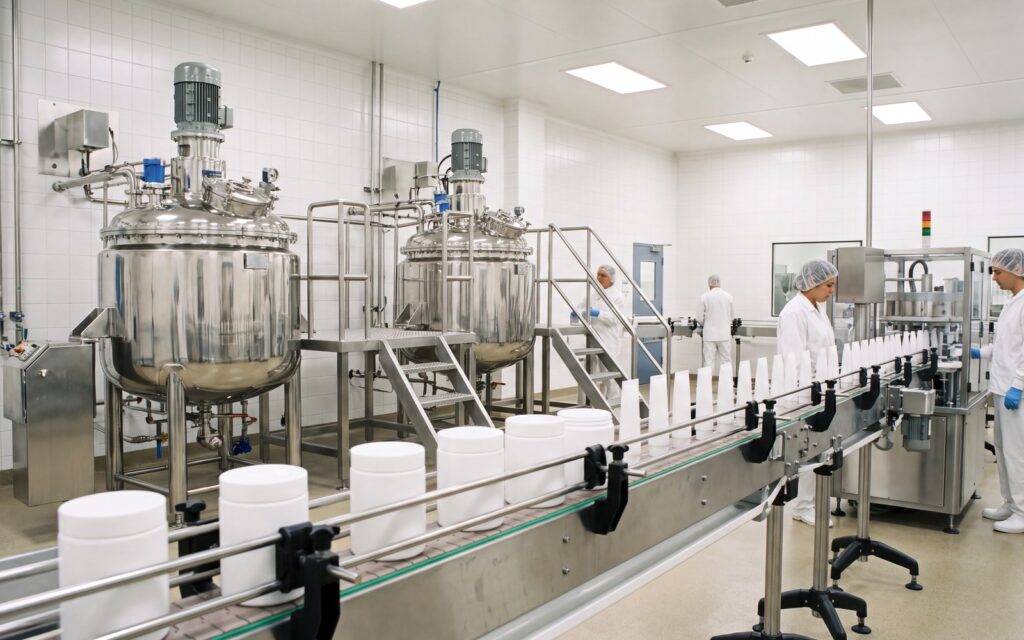
Cosmetic Production Facilities
Cosmetic Production Facilities are integrated structures that ensure the safe and traceable production of products in liquid and semi-solid forms in compliance with GMP and relevant regulations. These facilities, designed for Liquid Forms and Semi-Solid Forms, guarantee sustainable and legally compliant production with a quality management system, hygiene control, and audit-ready infrastructure.
Cosmetic production facilities are critical industrial structures that ensure personal care and beauty products are produced safely, traceably, and in compliance with legal requirements. Nowadays, it is no longer sufficient for companies wishing to operate in the cosmetic industry to merely produce; they are also required to have GMP-compliant cosmetic production facility infrastructure and a strong quality management system.
Increasing consumer expectations, expanding export markets, and tightening regulations by authorities, primarily the Ministry of Health, necessitate the planning of cosmetic production facilities with a regulation-focused approach. At this point, turnkey cosmetic production facilities offer a sustainable and safe solution for investors and producers.
This content details the sectoral importance of cosmetic production facilities, production infrastructures for liquid and semi-solid product forms, quality management systems, and the advantages provided by the turnkey approach.
Sectoral Importance of Cosmetic Production Facilities
Cosmetic production facilities are not only the places where products are physically produced; they are also structures that lie at the center of quality, safety, and legal compliance. The establishment of a cosmetic production facility directly affects the entire chain from product development to market launch.
For companies seeking a competitive advantage in the sector, the production facility must be:
-
Compliant with GMP (Good Manufacturing Practices) principles,
-
Meet the ISO 22716 Cosmetic GMP standard,
-
Possess an effective documentation and traceability system, which is critically important.
For brands particularly targeting exports, a facility infrastructure fully compliant with regulations is regarded as a prerequisite for market access.
Product-Based Cosmetic Production Facilities
Cosmetic production facilities contain various processes, equipment, and quality requirements depending on the physical forms of the products to be produced. The two most common main categories are Liquid Forms and Semi-Solid Forms.
Liquid Forms
Liquid form cosmetic products make up the broadest product group in the sector. Shampoos, shower gels, toners, lotions, micellar waters, and perfumes fall into this category. A liquid cosmetic production facility must be specifically designed for homogeneous mixing, microbiological control, and stability management.
The key elements that stand out in quality management in these facilities are:
-
Carrying out raw material acceptance and control processes in accordance with GMP
-
Batch-based production and traceability systems
-
Controlling microbiological risks
-
Cleaning validation and cross-contamination prevention procedures
In liquid form production areas, documentation and recording systems play a determinative role in inspections as much as process control.
Semi-Solid Forms
Creams, ointments, gels, balms, masks, and other products constitute semi-solid cosmetic forms. Semi-solid cosmetic production facilities require a more precise quality infrastructure in terms of product stability and homogeneity.
The critical quality elements to pay special attention to in these facilities include:
-
Formulation verification and process validation
-
Monitoring critical process parameters
-
Packaging-product compatibility checks
-
Shelf life and stability studies
In semi-solid form production, the conditions of the production environment and personnel hygiene procedures directly affect product quality.
Quality Management System and Regulatory Compliance
The success of cosmetic manufacturing facilities is largely related to the established Quality Management System (QMS). The quality system created based on the ISO 22716 standard should encompass all operations of the facility.
Quality System Organization
- Clear definitions of responsibilities and authorities
- Separation of quality assurance and quality control functions
- Training and competency management
Documentation Structure
- Standard Operating Procedures (SOPs)
- Production and control records
- Change, deviation, and CAPA management
Regulatory Requirements
- ISO 22716 Cosmetic GMP
- Ministry of Health Cosmetic Regulation
- Product Safety Assessment File (PIF) requirements
This structure ensures that the facility is always ready for inspections.
Advantages of Turnkey Cosmetic Manufacturing Facilities
Turnkey cosmetic manufacturing facilities offer investors a holistic solution managed from a single center. This approach allows the quality system to be integrated into the facility design.
Main advantages:
- Facility structure that is compliant with regulations and ready for inspection
- Time and cost control
- Integrated management of qualification and validation processes
- Reduction of operational risks
This model provides a sustainable start, especially for new investors.
Qualification, Validation, and Preparation for Inspection
In cosmetic manufacturing facilities, the verification of equipment, areas, and processes is mandatory. Qualification and validation efforts ensure the legal and technical compliance of the facility.
In this context:
- Area and equipment qualification
- Process and cleaning validation
- Internal audits and audit simulations play an important role.
A facility ready for inspection is the most significant guarantee of operational continuity.
Sıkça Sorulan Sorular
What standards are required to establish a cosmetic manufacturing facility?
The ISO 22716 Cosmetic GMP standard is the fundamental requirement. Compliance with national legislation and Ministry of Health regulations is also mandatory.
Can liquid and semi-solid productions be carried out in the same facility?
Yes, but area segregation and procedures should be established to prevent cross-contamination risks.
What does a turnkey cosmetic manufacturing facility provide?
It ensures that all processes from facility design to the quality system are established in an integrated and compatible manner.
Is it possible to produce without a quality management system?
Legally, it is not possible. The quality system is a fundamental requirement for cosmetic production.
How is preparation for inspections ensured?
Regular internal audits, document currency, and staff training prepare the facility for inspection.
Request a Quote for Your Project
Our expert team is ready to provide customized solutions for your needs.
Get in touchCatalog
You can review our catalogs for detailed information about our products and services.
Our Related Services
- Medical Products Medical Devices (Class I & II)
- Human, Veterinary and Traditional Herbal Medicine Production
- Biocidal Product Production
- FDA Inspection Consulting
- Aromatherapy Production Facilities
- GMP Consulting
- Nutritional Supplement Production
- Turnkey Production Facilities
- HACCP Consulting
- Clean Room Setup
Related Guides
Guides on setup, costs and regulations
-
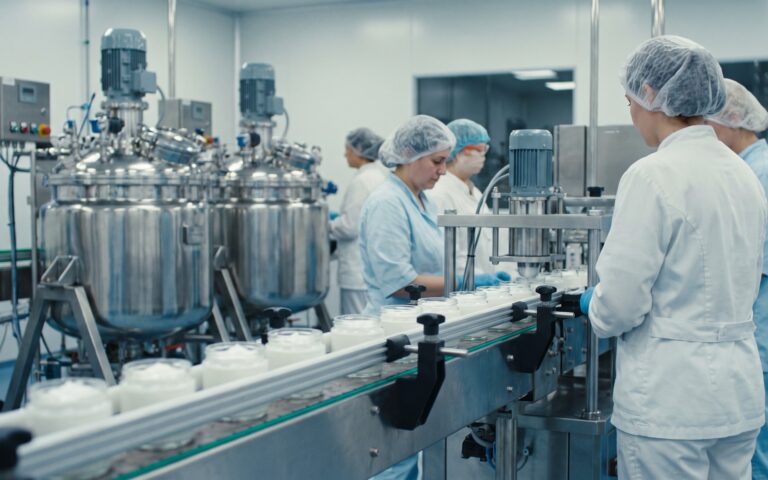 How to Establish a Cosmetic Manufacturing Factory?
How to establish a cosmetic manufacturing factory? A detailed guide with step-by-step processes, requirements, and cost analyses.
Read more
-
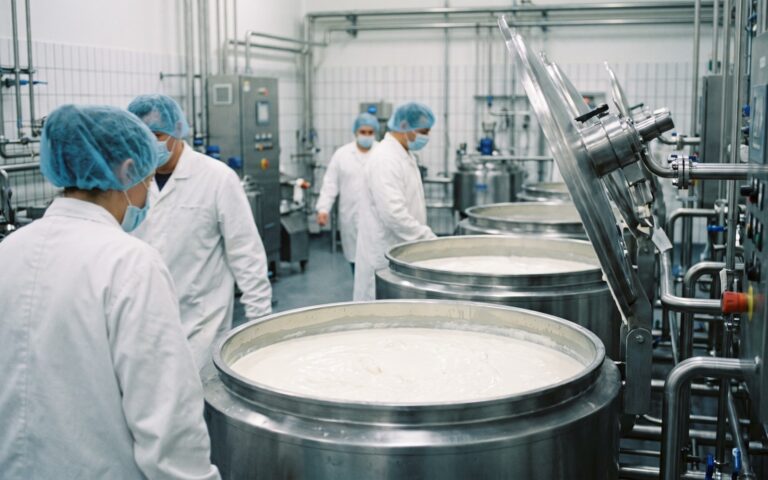 How to Establish Emulsion Production Facilities?
A detailed guide for establishing emulsion production facilities, ensuring quality management and regulatory compliance. The process, costs, and…
Read more
-
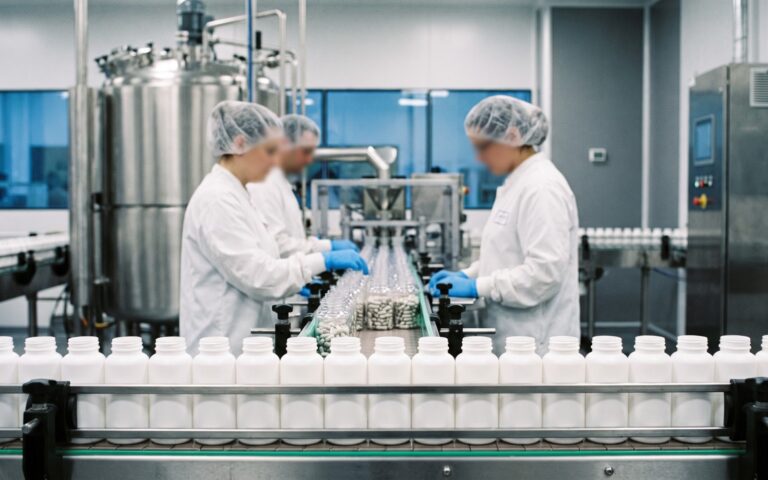 How to Establish a Food Supplement Production Factory?
A comprehensive guide on the processes, requirements, and costs of establishing a food supplement production factory.
Read more
-
 How to Set Up Capsule Filling Production Facilities?
A detailed guide on the processes, requirements, and costs to consider when setting up capsule filling production facilities.
Read more