
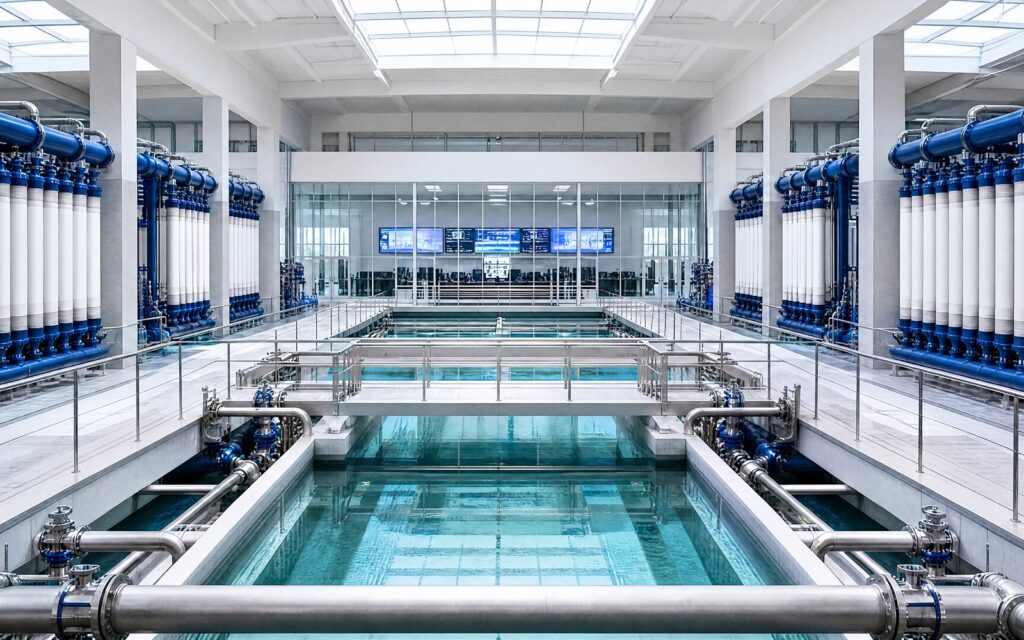
Establishment of Drinking Water Treatment Facility
Envora Global implements drinking water treatment facilities for industrial and corporate-scale applications with a turnkey approach that encompasses raw water analysis, process engineering, mechanical-electrical design, PLC/SCADA-based automation, field assembly, and commissioning stages. Projects focus on capacity planning, regulatory compliance, optimization of energy and chemical consumption, process safety, and continuous operation. After commissioning, technical support is provided throughout the facility’s lifecycle with maintenance, spare parts, remote monitoring, and process optimization services.
Industrial facilities, organized industrial zones, campuses, and municipalities require a reliable and standards-compliant drinking water supply, which is a critical infrastructure component. Fluctuations in raw water quality, increasing consumption values, and regulatory pressures have made drinking water treatment facilities an integral part of operational continuity. Envora Global is an engineering firm that establishes turnkey drinking water treatment facilities for industrial and corporate-scale projects, ranging from raw water analysis to process design, mechanical-electrical project development to automation and commissioning. Our goal is to build facilities that are optimized for operating costs, have high process safety, are durable, and fully comply with regulations.
The establishment of a drinking water treatment facility, especially when considered on an industrial scale, entails a multidisciplinary study encompassing process engineering, mechanical design, electrical-automation integration, and field applications. Envora Global evaluates projects based on process safety, operational continuity, and total cost of ownership (TCO) criteria.
The project begins with the analysis of the raw water source (groundwater, surface water, dam, lake, well, etc.) and the consumption profile. Daily average flow, peak flow, 24-hour consumption curves, capacity increase scenarios for future years, and relevant drinking water standards are considered. Physical, chemical, and microbiological parameters associated with raw water are clarified through laboratory analyses and field measurements. These data form the fundamental inputs for the process design.
Next, a process flow diagram is created suitable for the characteristics of the raw water. Depending on the needs, process steps such as pre-treatment (screening, static mixing), coagulation-flocculation, sedimentation/lamella sedimentation, pressure sand filtration, activated carbon filtration, iron-manganese removal, softening, ultrafiltration, or reverse osmosis are configured. Disinfection options, including chlorination, UV, or ozone systems, are evaluated. The goal here is to create a design that balances investment costs with operating costs while also offering process flexibility.
During the mechanical design phase, tank volumes, backwash flows, chemical dosing points, piping lines, and valve configurations are calculated. All components used (pumps, filter vessels, instruments, valves, dosing units) are chosen from certified products suitable for industrial working conditions. For facilities that operate 24/7, redundant pumps, bypass lines, parallel filter configurations, and necessary isolation scenarios for maintenance and repair are taken into account.
On the electrical and automation side, the facility is designed with options for PLC-based control, SCADA monitoring, data logging, and remote access. Process parameters (flow, level, pressure, pH, conductivity, free chlorine, etc.) are measured online, and the system is controlled automatically based on this data. In case of alarms and failures, notification and reporting infrastructures are designed to provide operators and responsible technical teams with the ability to respond quickly.
During the field application phase, construction infrastructure, mechanical and electrical assembly works are carried out in coordination. Envora Global optimizes the commissioning process by aligning the site work schedule with the calendars of other disciplines (construction, architecture, infrastructure, etc.). After completing cold tests, pressure tests, function tests, and performance tests, the facility is gradually put into operation, and compliance with design criteria is verified.
After commissioning, the operator team is provided with detailed training on process operation, chemical preparation and dosing, filter backwash procedures, failure scenarios, and periodic maintenance plans. Envora Global remains alongside its clients throughout the facility’s lifecycle by offering services such as maintenance contracts, remote monitoring support, process optimization efforts, and capacity increase.
Establishment of Drinking Water Treatment Facility
In the establishment of a drinking water treatment facility, we select the treatment process according to the raw water source, design the filtration and disinfection steps along with automation, and commission the facility as a turnkey project.
Reference Projects
- Al-Hashimyah, Babil (Iraq) – Drinking Water Treatment Facility – A drinking water treatment facility with a daily capacity of 100,000 m³ for urban and industrial use.
Let’s Plan Your Project Together
Contact Envora Global to assess your needs for the establishment of a drinking water treatment facility project and to create your roadmap together.
Process Engineering and Design Criteria
-
The process steps are determined by considering raw water analysis results, design flow rates, and target drinking water parameters.
-
Sludge formation, chemical consumption, energy consumption, and waste management are also among the design inputs.
-
Process flexibility is ensured for different operational scenarios (minimum-maximum flow, seasonal variations).
Raw Water Analysis and Characterization
-
Physical (turbidity, color, temperature), chemical (hardness, iron, manganese, ammonia, nitrate, conductivity, TOC, etc.) and microbiological parameters are evaluated.
-
Existing and potential polluting sources (industrial discharges, agricultural activities, etc.) are analyzed, and a risk-based approach is applied.
Pre-Treatment and Coagulation-Flocculation Systems
-
Chemical conditioning is designed for high turbidity and organic load in surface waters.
-
Mixing equipment, chemical dosing pumps, static mixers, and flocculation tanks are sized according to capacity.
Sedimentation and Filtration Units
-
Classical sedimentation tanks or compact lamella sedimentation solutions are used.
-
Pressurized sand filters and/or multimedia filters are selected to achieve the desired outlet turbidity.
-
Backwash scenarios, water and air requirements are calculated in detail.
Membrane Technologies (Ultrafiltration / Reverse Osmosis)
-
Ultrafiltration or reverse osmosis systems are implemented in processes requiring high-quality drinking water.
-
Based on the pollution index, pre-treatment, cartridge filtration, antiscalant dosing, and CIP (on-site chemical cleaning) processes are planned.
Disinfection and Final Treatment
-
Disinfection technologies such as free chlorine, chlorine dioxide, UV, or ozonation are evaluated.
-
Contact tanks and dosing points are designed considering residual chlorine monitoring, contact time, and reaction kinetics.
Mechanical Design and Industrial Equipment Selection
-
Pumps, valves, piping, filter vessels, and tanks are selected based on operating pressure, temperature, and chemical resistance criteria.
-
Redundant pump configurations and bypass lines are implemented to ensure process continuity.
Electrical, Instrumentation, and Automation (PLC/SCADA)
-
Measurement and monitoring devices are integrated into all critical process points.
-
Automatic start/stop, backwashing, chemical dosing control, and tank level management are provided using PLC-controlled systems.
-
Trend monitoring, reporting, alarm management, and remote access are made possible through SCADA.
Construction, Field Assembly, and Commissioning
-
Reinforced concrete tanks, platforms, and machine rooms are designed considering maintenance accessibility and occupational safety requirements.
-
Mechanical and electrical installations are carried out using assembly procedures and test plans suitable for site conditions.
-
During the commissioning process, water quality, flow, pressure, and chemical consumption are compared with design values.
Operation, Maintenance, and Life Cycle Support
Planned maintenance programs, consumable and spare parts lists are prepared.
Process performance is regularly assessed through remote monitoring and periodic field visits.
In cases deemed necessary, process optimization and capacity increase projects are developed.
Sık Sorulan Sorular
What is the typical capacity range of a drinking water treatment plant on an industrial scale?
Although it varies on a project basis, Envora Global can typically design and install plants starting from a few m³/hour and reaching thousands of m³/day capacities. The capacity is clarified based on consumption profile, peak flow, and future growth scenarios.
What standards are considered in process design?
The relevant national drinking water legislation and international standards are referenced in the design. Water quality limit values are the main criterion in process selection and determination of operational parameters.
What solution do you offer for waters with high conductivity and hardness?
For these types of waters, pre-treatment + reverse osmosis or ion exchange-based solutions are generally evaluated. Based on the raw water analysis results, membrane selection, antiscalant dosing, CIP arrangement, and wastewater management are detailed.
What are the main items that most affect the operational cost of the facility?
Energy consumption, chemical consumption, filter media and cartridge changes, membrane replacement periods, and personnel costs are the main items. Envora Global makes process and equipment selections in a way that minimizes these costs.
What kind of backup strategy is implemented for plants operating 24/7?
Critical equipment (feed pumps, dosing pumps, etc.) is designed with redundant configurations. Filters and membrane lines are planned in parallel arrangements to ensure that the system can operate with partial capacity even during maintenance.
What data can be monitored through SCADA?
All critical data such as flow, pressure, level, pH, conductivity, free chlorine, tank levels, pump operating statuses, alarms, and fault records can be monitored, recorded, and reported from SCADA screens.
Do you provide services for the revision or capacity increase of an existing drinking water facility?
Yes. We undertake performance analysis of existing facilities, process revamping, equipment renewal, automation modernization, and capacity increase projects.
How does your technical support process work after commissioning?
After commissioning, system performance is monitored through close inspection, operator support, remote connection with SCADA control, and regular field visits for the specified duration. Process optimizations are carried out when necessary.
Request a Quote for Your Project
Our expert team is ready to provide tailored solutions for your needs.
Get in TouchOur catalogs
You can check our catalogs for detailed information about our products and services.
Related Guides
Guides on setup, costs and regulations
-
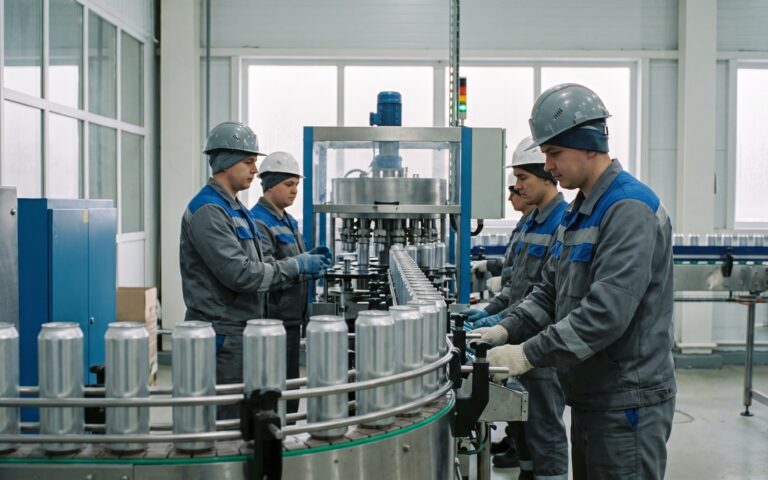 How to Establish an Energy Drink Production Factory?
What are the steps and requirements to consider when establishing an energy drink production factory? How can you…
Read more
-
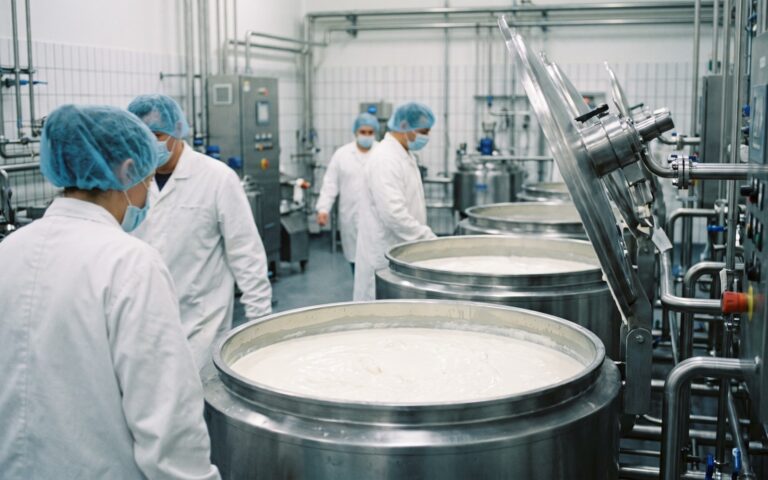 How to Establish Emulsion Production Facilities?
A detailed guide for establishing emulsion production facilities, ensuring quality management and regulatory compliance. The process, costs, and…
Read more
-
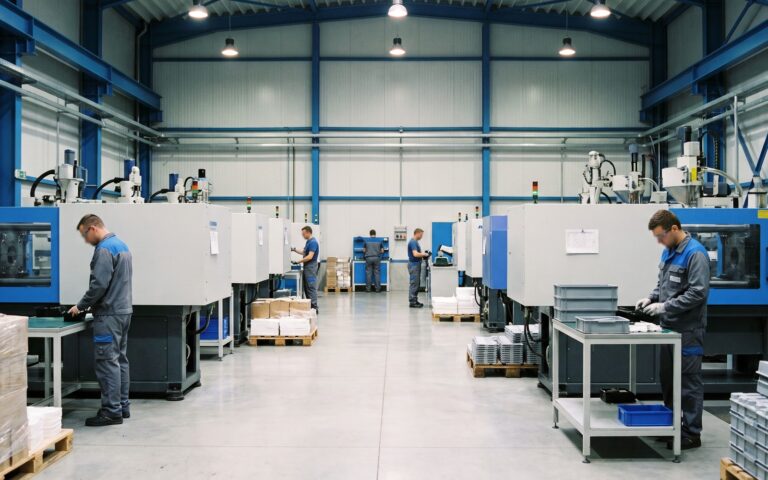 How to Establish an Injection Manufacturing Factory?
A detailed guide on the steps to consider in setting up an injection manufacturing factory, compliance standards, and…
Read more
-
 How to Establish Biocidal Product Manufacturing Facilities?
Get detailed information about the establishment of biocidal product manufacturing facilities, sectors, and products. Explore processes related to…
Read more