
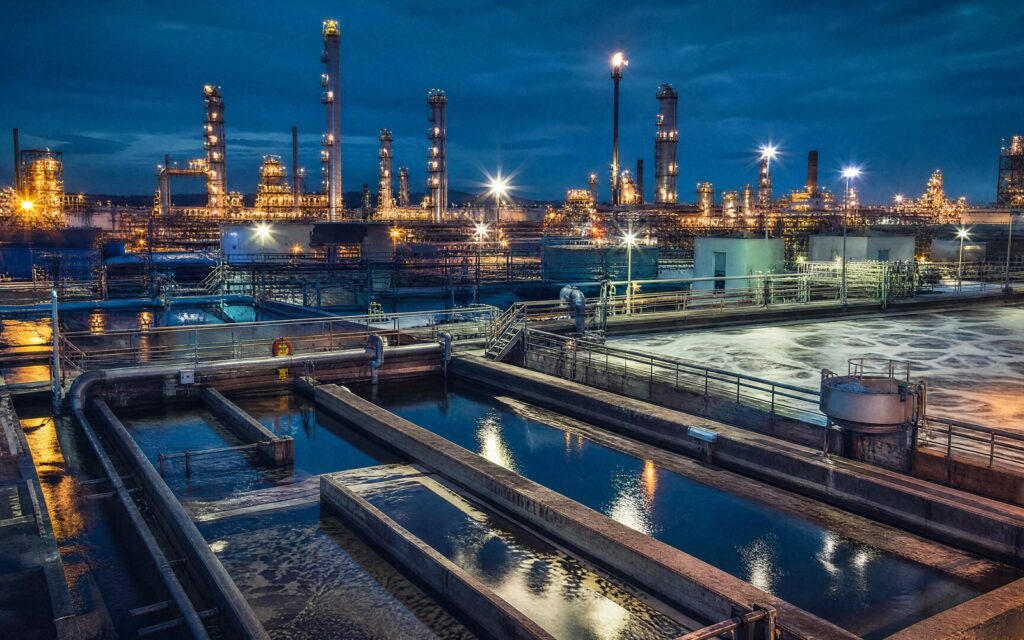
Oil Refinery Wastewater Treatment Plants
Envora Global offers turnkey solutions in the field of oil refinery wastewater treatment plants, covering wastewater source analysis, process design, mechanical-electrical project planning, Ex-proof equipment selection, automation/SCADA integration, field assembly, and commissioning stages. Taking into account the complex structure of refinery wastewater; it integrates oil retention, physical-chemical and biological treatment, advanced treatment, and sludge management steps. Thus, it provides a wastewater treatment infrastructure that is fully compliant with environmental regulations, optimized for operational costs, safe, and integrated with refinery operations.
Oil refineries are heavy industry facilities with processes that produce wastewater at high flow rates and complex compositions, having significant environmental impacts. Process drainages, tank field drainages, oily stormwater lines, cooling waters, and chemical washings create difficult wastewater mixtures containing oil-grease, free and emulsified hydrocarbons, phenols, sulfur compounds, heavy metals, and high COD/BOD loads. Therefore, the treatment of refinery wastewater requires much more advanced processes and engineering than standard industrial facilities. Envora Global offers end-to-end engineering solutions in the field of wastewater treatment plant design, installation, revision, and capacity increase specifically for oil refineries, building compliant, safe, and sustainable facilities.
Unlike classical industrial wastewater treatment facilities, oil refinery wastewater treatment plants must simultaneously manage both high organic loads (COD/BOD) and hydrocarbons, toxic components and variable flow/composition. This necessitates a multi-layered process structure at the design stage.
The wastewater generated in refineries consists of a combination of process unit drainages, equipment washings, tank field drainages, stormwater collection systems, cooling waters, and domestic quality wastewaters. The first step is the segregation (differentiation at the line level) and characterization of these different sources. Lines with high free oil content, heavily loaded chemical process waste, and relatively clean stormwater drainages are handled separately, and appropriate pre-treatment and balancing strategies are identified.
Envora Global starts the project with wastewater characterization and flow analyses. COD, BOD, TSS (total suspended solids), total petroleum hydrocarbons (TPH), phenols, sulfur compounds, nitrogen forms, salinity, and toxicity parameters are clarified through laboratory and field studies. Daily average and peak flow values are taken into account along with the stormwater impact and process stop-start scenarios for equalization volume and process design.
The process structure typically involves the following steps:
-
Pre-treatment and oil retention: Grills, sand traps, API/CPI separators, DAF (dissolved air flotation) systems are utilized to remove free oil and coarse pollution.
-
Physical-chemical treatment: Chemical processes are applied for coagulation-flocculation, pH neutralization, and removal of heavy metals and emulsified oils.
-
Biological treatment: Processes such as activated sludge, SBR, or MBR are used to remove high COD/BOD loads; toxicity and inhibitory effects are taken into consideration.
-
Advanced treatment and reuse: If necessary, water of reuse quality is obtained through filtration, activated carbon, or membrane technologies.
-
Sludge line: Processes for concentration, dehydration, and disposal/recovery of chemical and biological sludges that come out of the processes are designed.
Critical design criteria on refinery sites include explosive environments (Ex areas), volatile organic compounds, odors, and safety. Envora Global applies a holistic approach by selecting equipment and electrical installations suitable for these conditions, including closed systems, gas caps, ventilation, and odor control systems.
On the electrical-automation side, the facility is managed through a PLC/SCADA infrastructure monitoring flows, oil levels, COD/BOD trends, pH, ORP, dissolved oxygen, free chlorine, tank levels, pump statuses, and alarm data. This allows operation to be designed to be integrated with the refinery central control room; data is recorded and used for environmental reporting.
In addition to new installation projects, Envora Global also undertakes capacity increases, process revisions, equipment modernization, and automation improvements for existing refinery wastewater treatment plants. The goal is not only to meet regulatory limits but also to provide a treatment infrastructure that optimizes operating costs, has high process safety, and integrates with refinery operations.
Refinery Wastewater Treatment
In refinery wastewater treatment projects, we design the separation of oily waters, dissolved air flotation (DAF), and biological treatment steps together according to discharge and reuse targets.
Our Reference Projects
- BP Sakhalin Island Nogliki Oil Refinery Project – District heating systems for the refinery (2004–2005); engineering experience at the refinery site.
- BlackArk – Gold Process Water Treatment Plant – Process water and washing water treatment plant with a daily capacity of 15,000 m³ at the Asamankese gold site.
Let’s Plan Your Project Together
Contact Envora Global to assess your needs for your refinery wastewater treatment project and to create a roadmap together.
Wastewater Source Analysis and Characterization
All wastewater sources generated on the refinery site are analyzed on a pipeline basis. Flow rates and pollution parameters are determined for process drains, oily rainwater, tank farm drains, cooling waters, and domestic wastewater. This study is critical for pipeline segregation and appropriate pre-treatment arrangement.
Equalization and Hydraulic Design
Equalization basins are designed to dampen sudden changes in flow and pollution. The equalization volume is calculated based on the daily consumption profile, rainwater impact, and process downtime–operation scenarios. A stable load is transmitted to downstream processes by ensuring appropriate mixing, aeration, and foam control.
Oil Retention and Pre-Separation Systems (API/CPI, DAF, etc.)
API or CPI separators are used for the removal of free oil and surface hydrocarbons, and DAF units are employed if necessary. This step is essential for protecting the biological process and reducing the total hydrocarbon concentration. In the design, surface load, retention time, and the efficiency of oil removal systems are considered.
Physical-Chemical Treatment Processes
Coagulation-flocculation, pH adjustment, and chemical precipitation processes are applied for flows containing emulsified oil, heavy metals, and high suspended solids. Reactor volumes are determined taking into account mixing times, chemical dosage points, and sludge formation.
Biological Treatment (Activated Sludge, SBR, MBR, etc.)
The selected biological process for COD/BOD removal is designed based on the toxicity profile and temperature conditions of the wastewater. Activated sludge, sequencing batch reactor (SBR), or membrane bioreactor (MBR) solutions are evaluated according to target effluent water quality, space constraints, and reuse goals.
Advanced Treatment and Recovery
If the treated wastewater is to be reused as process water, cooling water, or in other auxiliary systems, advanced treatment technologies such as filtration, activated carbon, ozone, UF/RO are implemented. This both reduces the discharge load and alleviates the pressure on water resources.
Sludge Management and Disposal
The sludge generated from physical-chemical and biological processes undergoes concentration, dewatering (belt press, decanter, plate press, etc.), and disposal stages. The most suitable system is selected considering the characteristics, volume of sludge, and the existing waste management infrastructure of the refinery.
Explosive Atmosphere, Odor, and Occupational Safety Measures
Due to the risk of volatile organic compounds and explosive atmosphere in refinery areas, equipment and electrical devices are selected according to Ex-proof standards. Closed process equipment, odor control and gas scrubbing systems, ventilation, and gas detection systems are integral parts of the design.
Automation, SCADA, and Refinery DCS Integration
The wastewater treatment facility is managed with a PLC/SCADA infrastructure integrated into the refinery's overall control system (DCS). All critical parameters are monitored, recorded; alarms and operation trends enable process optimization and environmental reporting.
Revision, Modernization, and Capacity Increase
In existing refinery wastewater treatment facilities, process revision may be required due to increased production capacity or changing regulatory limits. Envora Global ensures the facility's adaptation to new conditions by undertaking performance analysis, process simulation, equipment renewal, automation modernization, and capacity increase projects.
Sık Sorulan Sorular
Why do refinery wastewater require a special treatment facility?
Refinery wastewater has a much more complex composition than standard industrial wastewater, containing hydrocarbons, phenols, sulfur compounds, heavy metals, and toxic organic components. Therefore, conventional domestic or simple industrial treatment facilities are insufficient; process design specific to refinery conditions is necessary.
What are typical pollutant parameters?
COD, BOD, SS, total petroleum hydrocarbons (TPH), oil-fats, phenols, sulfur compounds, ammonia, nitrogen forms, salinity, and heavy metals are critical parameters in refinery wastewater. The design is based on reducing these parameters to limit values.
Is it possible to reuse treated water within the refinery?
Yes. Depending on the process design, treated water can be reused as cooling water, process water, or in auxiliary services by passing through advanced treatment steps such as filtration, activated carbon, and membranes (UF/RO). This reduces both water consumption and discharge load.
What are the operating cost items for a refinery wastewater treatment facility?
The main items include energy consumption, chemical usage, sludge disposal costs, maintenance-repair expenses, and personnel costs. Envora Global optimizes the process and equipment selection to minimize these costs.
How are odor and gas emissions controlled?
Closed systems, ventilation, gas collection, and odor removal systems (biofilter, chemical scrubber, etc.) are designed, especially in critical areas such as oil separators, equalization basins, and sludge units. Thus, both occupational safety and environmental comfort are ensured.
How is the treatment facility made safe under explosive environment (Ex) conditions?
The motors, panels, instruments, and field equipment used in hazardous areas of the refinery site are selected according to Ex-proof standards. Grounding, equipotential systems, gas detection, and emergency procedures are detailed within the project.
My existing refinery wastewater treatment facility cannot meet the limits, what can you do?
Envora Global analyzes the process performance of the existing facility, identifies bottlenecks, and prepares an improvement package for revision/modernization. Process revision, additional treatment steps, or equipment renewal is aimed to achieve compliance with the limits.
Do you provide support in environmental regulations and reporting processes?
Yes. While regulatory limits are considered during the design phase, we also offer technical consultancy for analysis programs, reporting formats, and environmental permit processes during the operational phase.
Request a Quote for Your Project
Our expert team is ready to provide tailored solutions for your needs.
Get in TouchOur catalogs
You can check our catalogs for detailed information about our products and services.
Related Guides
Guides on setup, costs and regulations
-
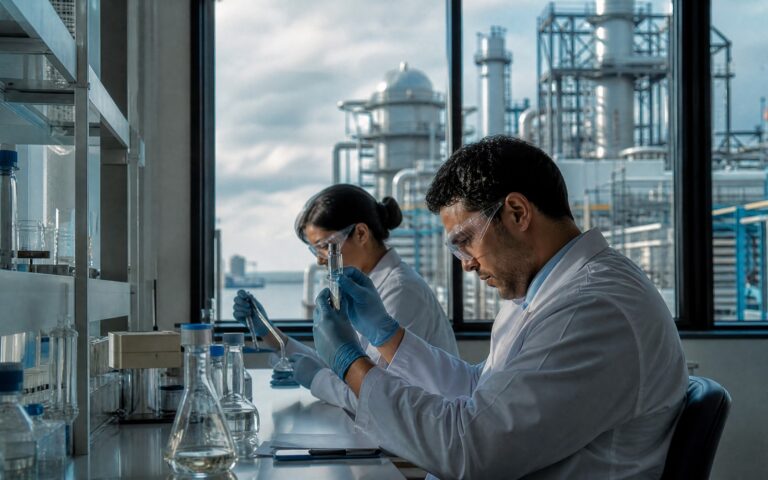 Steps for Feed Seawater Analysis and Process Design
Learn step by step how feed water analysis and process design are carried out in seawater treatment plants.…
Read more
-
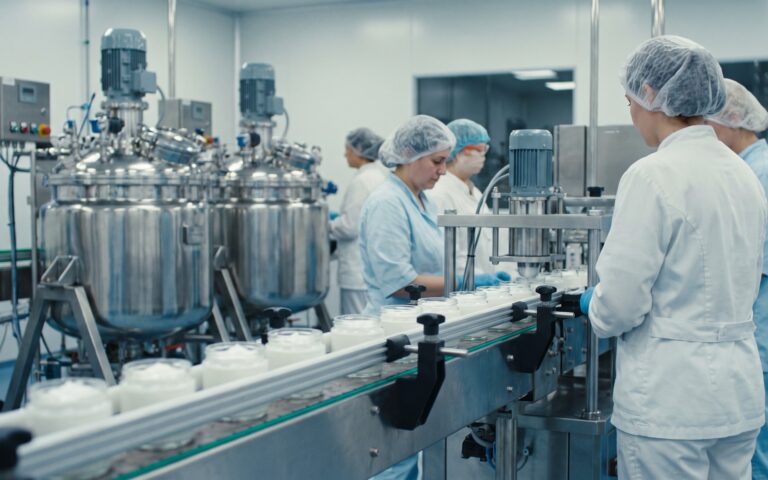 How to Establish a Cosmetic Manufacturing Factory?
How to establish a cosmetic manufacturing factory? A detailed guide with step-by-step processes, requirements, and cost analyses.
Read more
-
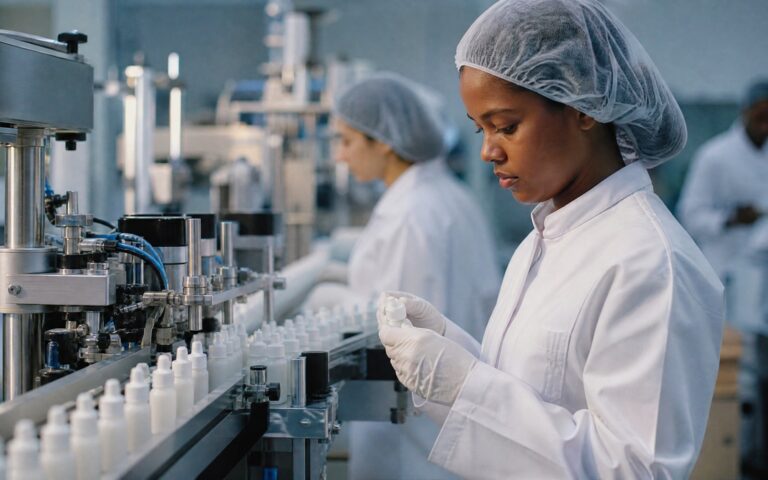 How to Establish a Liquid Filling Production Factory?
Explore the sectors, products, and process steps in the establishment of a liquid filling production factory.
Read more
-
 How to Set Up a Liquid Pharmaceutical Facility?
Discover the necessary steps and considerations for establishing liquid pharmaceutical production facilities. Get guidance on quality management systems…
Read more