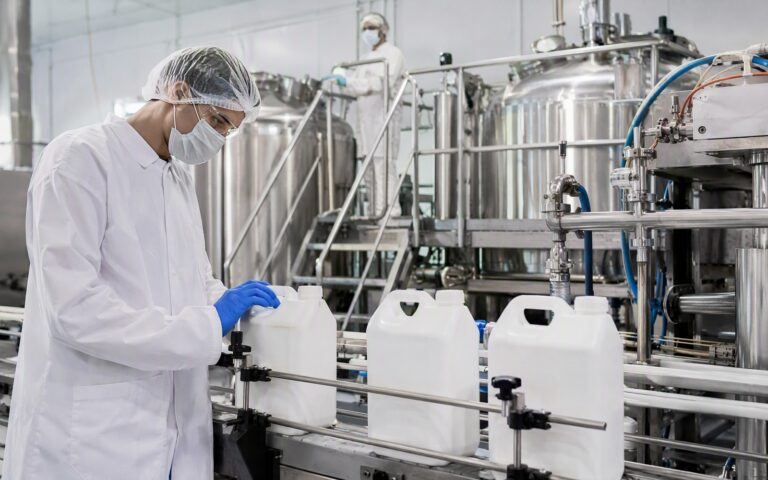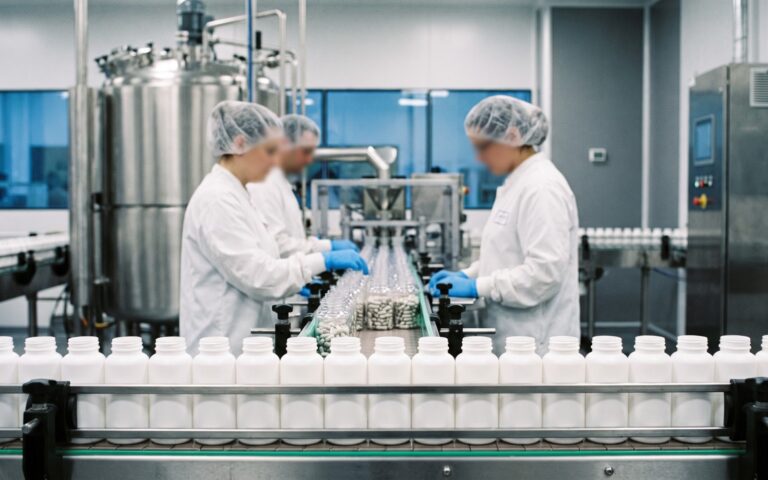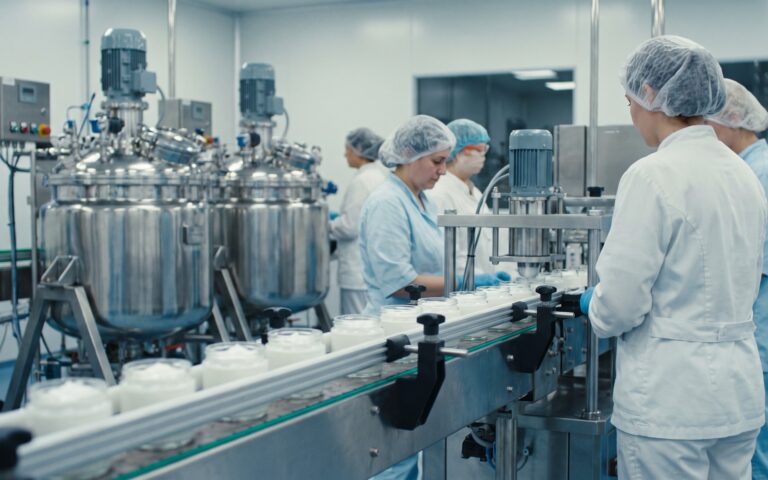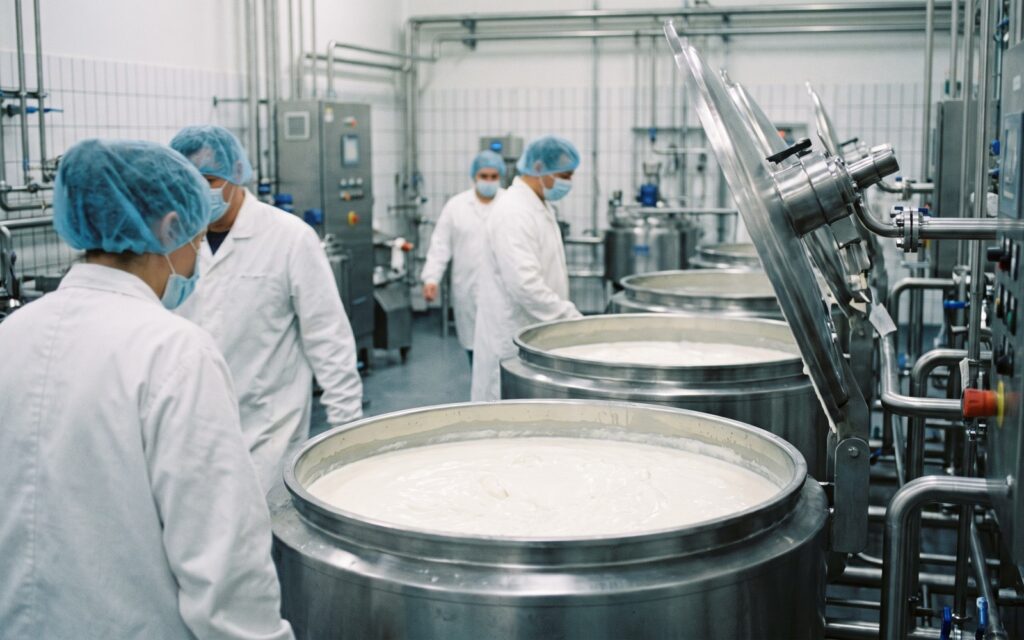
Emulsion production facilities are complex plants commonly used in the cosmetics, pharmaceutical, and food industries. The establishment of these facilities requires not only the physical construction of the production line but also the creation of a quality management system, regulatory compliance, and an audit-ready structure. In emulsion production, ensuring high product quality and fully meeting legal requirements is critical. Therefore, comprehensive planning and collaboration with an expert team are essential.
You can review the services we provide, from design to commissioning, on our Cosmetic Production Facilities page.
Sectors and Products Covered
Emulsion production facilities operate primarily in highly regulated sectors such as cosmetics, pharmaceuticals, and food. Each of these sectors has different requirements regarding product quality and reliability. For instance, while the cosmetics sector aims to produce products like lotions, creams, and serums, the pharmaceutical sector focuses on products such as syrups and suspensions. In the food sector, sauces and emulsified products are produced.
These facilities encompass a wide range of product categories, including personal care products, dermocosmetics, hotel amenities, and medical products. Each product category is characterized by different production techniques and equipment requirements. Therefore, establishing a facility that offers customized solutions for each sector and product type is of great importance.
Establishment Process of Emulsion Production Facilities
The establishment of emulsion production facilities begins with a comprehensive planning and design phase. The first step is to determine which products the facility will produce and which sectors it will serve. This choice directly affects the size, capacity, and necessary equipment of the facility.
During the establishment process, site selection is also a critical step. Site selection should consider factors such as logistics costs, ease of transportation, and environmental factors. Additionally, the chosen site must comply with local laws and regulations.
The design of the facility should aim to maximize the efficiency and productivity of the production processes. At this stage, elements such as the layout of the production line, material flow, and personnel mobility are taken into account. Furthermore, necessary measures must be taken to ensure that the facility meets hygiene and safety standards.
The selection and installation of production equipment are crucial for the efficiency of the facility and the quality of the products. Equipment such as mixers, homogenizers, and filling machines required for emulsion production must meet high-quality standards. The placement and integration of this equipment ensure that the production process operates smoothly.
Finally, quality control and validation processes are critical steps for preparing the facility for audits. Production processes must be continuously monitored and tested with strict quality control procedures. Additionally, all processes of the facility must comply with international standards such as GMP (Good Manufacturing Practices) and HACCP (Hazard Analysis and Critical Control Points).
Requirements and Standards
The establishment of emulsion production facilities requires compliance with a series of legal and technical requirements. First, it is mandatory for the facility to comply with local and international regulations. This is especially important in highly regulated sectors such as cosmetics and pharmaceuticals.
Quality management systems ensure that the facility operates effectively and that the quality of the produced products remains consistently high. Quality management standards such as ISO 9001 promote the continuous improvement of the facility’s operational processes.
GMP and HACCP standards are mandatory standards, especially in the food and pharmaceutical sectors. These standards ensure that production processes are hygienic and reliable. Additionally, compliance with these standards is necessary for the smooth market introduction of products.
Regulatory compliance also includes the facility’s readiness for audits. The facility must always be prepared for inspections by local and international regulatory authorities. This guarantees compliance of the products with legal requirements and transparency of the facility’s operational processes.
Cost Analysis and Duration
The establishment of emulsion production facilities requires a significant investment. This investment varies depending on the size of the facility, production capacity, and the quality of the selected equipment. Establishment costs are generally referred to as CAPEX (Capital Expenditures), and these costs cover the construction of the facility, equipment procurement, and installation processes.
Accurate estimation of costs is important for ensuring the financial sustainability of the project. Therefore, a detailed cost analysis should be conducted, taking into account all possible expenses. Additionally, to ensure the project is completed on time, a clear timeline should be established for each phase of the establishment process.
The duration of the establishment process varies depending on the size and complexity of the facility. Generally, the establishment of emulsion production facilities can take several months. This duration is necessary for equipment procurement, construction work, and completion of quality control processes.
Common Mistakes
Common mistakes made during the establishment of emulsion production facilities can negatively impact the success of the project. Careful planning and continuous monitoring are required to avoid these mistakes.
The first common mistake is inadequate planning and preparation. Insufficient planning at the initial stage of the project can lead to increased costs and delays. Therefore, a detailed plan should be prepared for each phase, and all necessary resources should be identified in advance.
Another common mistake is overlooking regulatory compliance. A facility that does not comply with regulations may face serious legal issues and may be prevented from introducing products to the market. Therefore, all regulatory requirements should be carefully evaluated from start to finish.
Finally, inadequate quality control processes are also a common mistake. Strict quality control procedures must be implemented to ensure that product quality remains consistently high. This not only increases customer satisfaction but also ensures legal compliance.
Related guides: How to Establish a Cosmetic Manufacturing Factory?, How to Establish a Liquid Soap Production Factory? and How to Set Up Face Mask Production Facilities?.