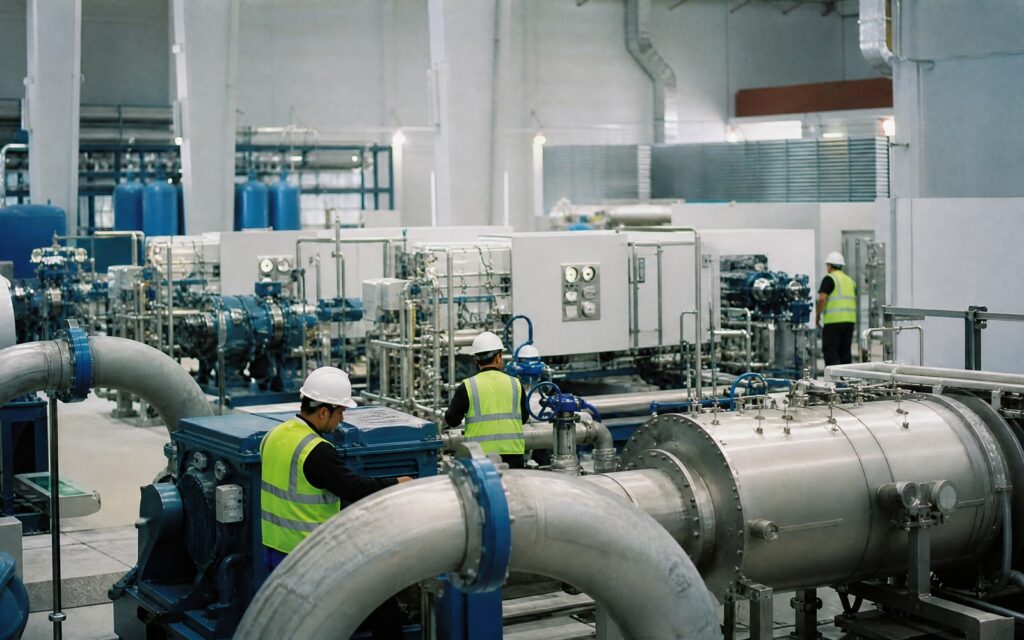
High pressure pumps and energy recovery systems are critical components for increasing energy efficiency in water treatment plants. These systems reduce costs and environmental impacts by minimizing the energy consumed during the water purification process. In this article, you will find detailed information on how to install these systems and the steps that need to be followed.
You can review the services we provide, from design to commissioning, on our Seawater Treatment Systems page.
Sectors and Products Covered
High pressure pumps and energy recovery systems are commonly used, especially in drinking water treatment plants. These facilities are important for both industrial and municipal applications. The use of these systems becomes even more critical in cases where the water has high conductivity and hardness. In terms of products, these systems typically operate in conjunction with membrane technologies such as reverse osmosis and ultrafiltration.
- Industrial Water Treatment: High pressure pumps are used for water purification in sectors such as petrochemicals, food and beverage, and textiles.
- Municipal Water Treatment: These systems are critical in municipal water treatment plants to meet the drinking water needs of cities.
- Wastewater Treatment: Energy recovery systems are used to reduce costs in the treatment of industrial and domestic wastewater.
Process Steps
The installation of high pressure pumps and energy recovery systems requires careful planning and execution. The first step is to determine the specifications required for drinking water treatment plant installation. This varies according to the characteristics of the water and the purification requirements.
- Project Planning: The first phase of installation involves determining the capacity of the facility and the technologies to be used. At this stage, energy consumption and recovery potential are evaluated. During project planning, local regulations and environmental impacts should be considered.
- System Design: Based on project planning, a detailed design is made for high pressure pumps and energy recovery systems. This design is critical for the efficient operation of the system. The quality and durability of the materials used should be taken into account during the design phase.
- Installation and Integration: Following the design, the installation of the systems and their integration with the existing facility is carried out. At this stage, it is important to ensure that mechanical and electrical connections are made correctly. Necessary adjustments should be made during integration to ensure the systems operate compatibly.
- Testing and Commissioning: After the systems are installed, tests are conducted to ensure they operate correctly. Adjustments are made if necessary, and the system is commissioned. The testing phase is a critical step for the long-term performance of the system.
Requirements and Standards
High pressure pumps and energy recovery systems used in drinking water treatment plants must comply with specific standards and requirements. These standards are established at both national and international levels and ensure the safe and effective operation of the systems. For example, it is generally mandatory for the equipment used in facilities to have CE and ISO certifications. Additionally, environmental standards must be adhered to in order to minimize the systems’ impact on the environment.
Cost and Duration
The installation of high pressure pumps and energy recovery systems may require a high initial investment cost. However, the energy savings and efficiency gains they provide in the long run can offset these costs. The installation duration varies depending on the size and complexity of the facility. Typically, the complete installation of a facility can take several months. When conducting a cost analysis, maintenance and operational costs should also be considered alongside energy savings.
Common Mistakes
Common mistakes made during the installation process include incorrect sizing of the systems and inadequate testing processes. Additionally, ineffective integration of energy recovery systems can hinder the expected efficiency gains. To avoid such mistakes, it is important to work with experienced engineers and specialists. Furthermore, neglecting regular maintenance of the systems can lead to performance degradation in the long run. Regular maintenance and monitoring after installation are critical for ensuring the efficient operation of the systems.
Comparison and Example Scenarios
The applications of high pressure pumps and energy recovery systems in different sectors can help us better understand the advantages and disadvantages of the systems. For example, systems used in the petrochemical sector are optimized for high-pressure processes, while lower pressure systems may be preferred in municipal water treatment plants. In both cases, energy recovery systems play a critical role in reducing operational costs and minimizing environmental impacts.
As an example scenario, the integration of high pressure pumps and energy recovery systems in a municipal water treatment plant can reduce the facility’s energy consumption by 30%. This not only provides cost savings but also reduces the facility’s environmental footprint. Such examples highlight the importance of correctly implementing the systems.
Check List: Considerations for Installation
- Correct Sizing: Accurately determining the capacity of the systems is critical for efficiency.
- Use of Quality Materials: Durable and long-lasting materials should be selected.
- Regular Testing and Maintenance: Systems must be regularly tested and maintained.
- Energy Recovery Integration: The effective integration of recovery systems should be ensured.
- Compliance with Environmental Standards: Necessary standards should be adhered to in order to minimize environmental impacts.
Example Application: Energy Savings and Efficiency
The application of high pressure pumps and energy recovery systems in a food and beverage factory has reduced the factory’s energy consumption by 25%. This has resulted in significant reductions in annual energy costs and has minimized the factory’s environmental footprint. The project was successful due to correct sizing and integrated system design. This example demonstrates how effective energy efficiency projects can be when implemented correctly.
Related guides: How to Build an Intake Structure and Pre-Protection?, Steps for Feed Seawater Analysis and Process Design and How to Install Seawater Reverse Osmosis (SWRO) Modules?.