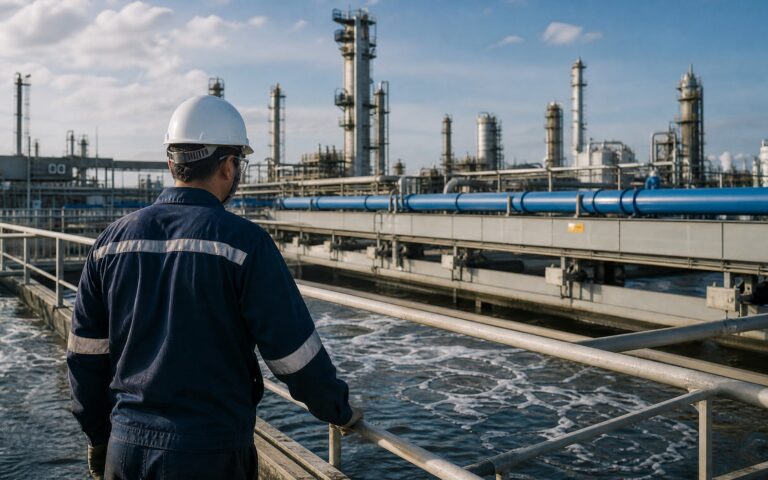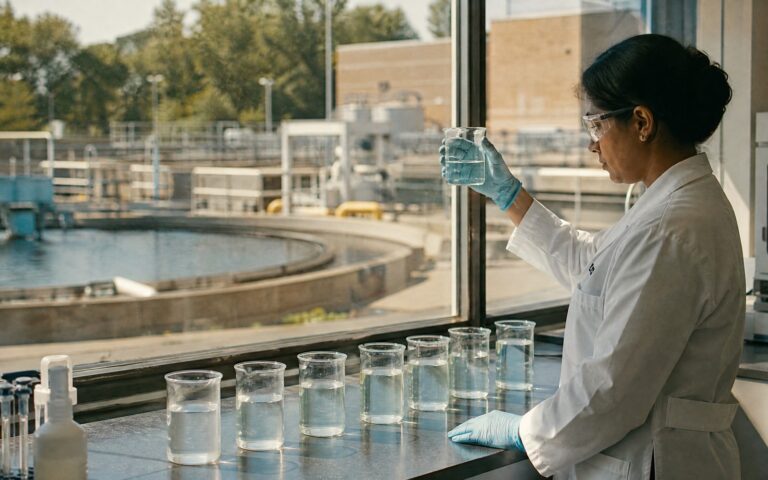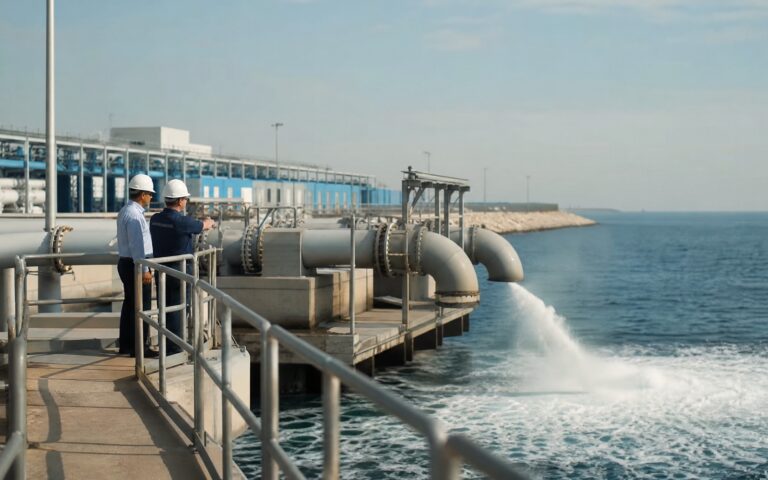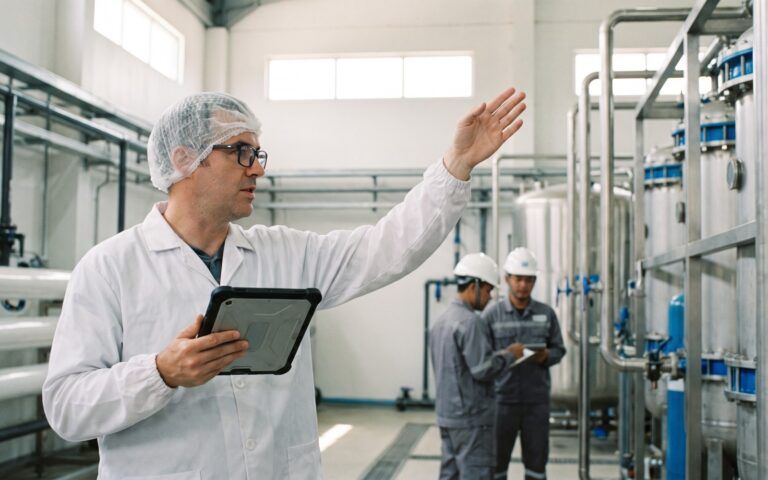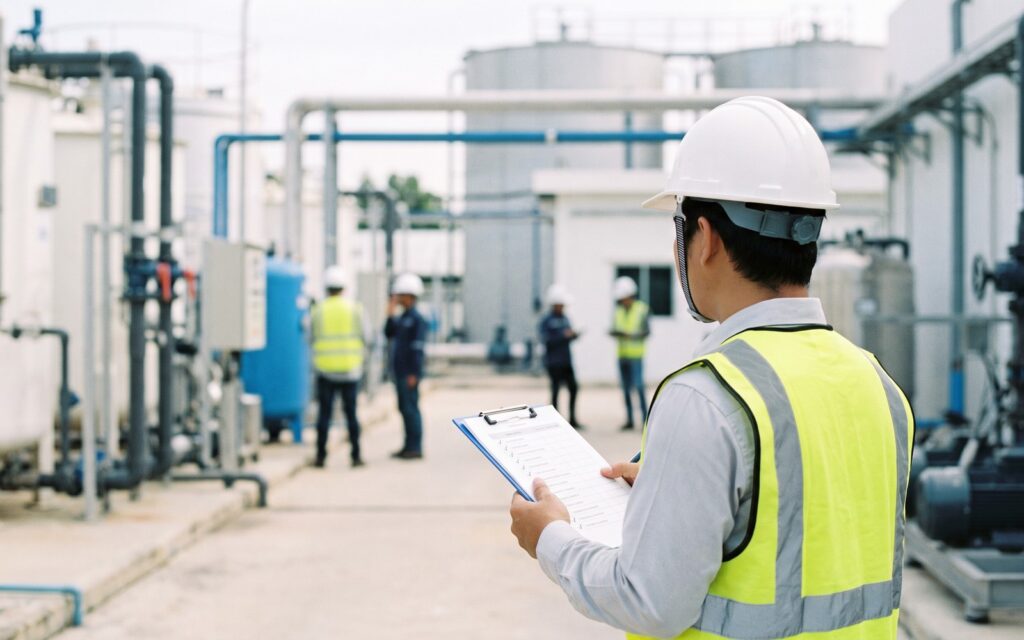
Wastewater treatment plants play a critical role in environmental protection and the sustainable use of water resources. The GMP (Good Manufacturing Practices) standards applied in these facilities are of great importance for both increasing operational efficiency and ensuring water quality. GMP standards not only ensure quality control in water treatment processes but also ensure that the facilities operate in compliance with environmental regulations and health standards.
Sectors and Products Covered
Wastewater treatment plants have a wide sectoral coverage. Particularly, sectors such as industrial manufacturing factories, chemical plants, food and beverage producers, textile factories, and power plants fall within this scope. In terms of product diversity, the types of wastewater processed in treatment plants include various types such as industrial wastewater, domestic wastewater, and rainwater.
Processes in Wastewater Treatment Plants
Processes in wastewater treatment plants generally consist of several main stages: preliminary treatment, primary treatment, secondary treatment, and finally tertiary treatment. In the preliminary treatment stage, large solid particles and sediments are separated from the water using physical methods. In primary treatment, smaller particles are precipitated using chemical coagulation and flocculation methods. Secondary treatment involves the biological processes for the breakdown of organic matter. Finally, the tertiary treatment stage uses advanced techniques to further improve the chemical and biological quality of the water.
Each stage requires specific equipment and techniques. For example, the screens and grit chambers used in preliminary treatment effectively separate large particles, while the sedimentation tanks used in primary treatment help make the water cleaner. In secondary treatment, biological reactors and sludge return systems play a key role in the breakdown of organic matter. Tertiary treatment is typically carried out with more sophisticated technologies such as membrane filtration systems and activated carbon filters.
Requirements of GMP Standards
GMP standards bring many important requirements in wastewater treatment plants. These standards include essential elements such as process safety, traceability, documentation, and continuous improvement. For example, in terms of process safety, it is important to regularly monitor water quality at every stage of the facility and intervene when necessary. Additionally, detailed documentation and record-keeping of all processes play a critical role in terms of traceability.
In GMP practices, the training and awareness of employees also hold significant importance. Training programs ensure that employees are knowledgeable about the processes and can prevent potential errors. Furthermore, the regular calibration and maintenance of all equipment within the facility are part of the GMP standards.
Cost and Time Management
The cost and time management of wastewater treatment plants is of great importance for the efficiency of the facility. Cost factors include items such as energy consumption, chemical usage, and equipment maintenance. In terms of time, the commissioning of the facility, maintenance, and repair processes should be carefully planned. Effectively managing these processes not only reduces operating costs but also ensures the uninterrupted operation of the facility.
Especially, energy consumption is one of the largest cost items for wastewater treatment plants. To increase energy efficiency, it is necessary to use energy-saving equipment and optimize processes. Additionally, minimizing chemical usage and preferring alternative biological treatment methods reduces both costs and environmental impacts.
Common Mistakes and Precautions
Common mistakes encountered in wastewater treatment processes include incorrect equipment selection, inadequate maintenance practices, and insufficient monitoring of processes. Such mistakes can lead to a decrease in water quality and an increase in operating costs. Therefore, careful attention should be paid to equipment selection, and maintenance processes should be carried out regularly. Moreover, advanced automation systems should be used to ensure the traceability of all processes.
Incorrect equipment selection often arises from not fully analyzing the needs of the facility. Therefore, the correct equipment selection should be made considering the capacity of the facility, the pollutant load of the water, and the treatment goals. Additionally, neglecting maintenance processes can lead to equipment failures and thus unexpected costs. To prevent such issues, regular maintenance programs should be established and implemented.
Technological Developments and Innovations
Wastewater treatment technologies are continuously evolving and being renewed. Next-generation membrane technologies, biological treatment systems, and smart automation solutions are enhancing the efficiency of facilities and improving water quality. In particular, IoT (Internet of Things) based systems allow for remote monitoring and management of facilities. Such innovations reduce operational costs and support environmental sustainability.
Clean Room Applications in Wastewater Treatment Plants
Clean room applications in wastewater treatment plants are of great importance, especially in areas where sensitive processes are carried out. Clean rooms are special areas where air quality is controlled, and particle and microorganism levels are kept to a minimum. These applications play a critical role, especially in the stages where water is highly treated and prepared for reuse.
Clean room standards are defined by international norms such as ISO 14644. These standards regulate the particle count in the room, temperature and humidity control, pressure differentials, and air change rates. Clean room applications in wastewater treatment plants are implemented in areas where sensitive technologies such as membrane filtration systems and advanced oxidation processes are used. This way, water quality is preserved, and the effectiveness of treatment processes is increased.
Considerations in Equipment Selection
Equipment selection in wastewater treatment plants directly affects the overall performance and efficiency of the facility. Choosing the right equipment reduces operating costs and improves water quality. There are several important criteria to consider in equipment selection.
Firstly, the capacity of the equipment must be compatible with the needs of the facility. Equipment selection should be made considering the facility’s daily water treatment capacity, the pollutant load of the water, and treatment goals. Additionally, the energy efficiency of the equipment should also be taken into account. Energy-saving pumps, motors, and other equipment not only reduce operating costs but also support environmental sustainability.
Moreover, the durability of the equipment and maintenance requirements are also important factors. Long-lasting and low-maintenance equipment ensures the uninterrupted operation of the facility. Furthermore, services such as technical support and spare parts supply provided by the manufacturer should also be evaluated.
HACCP Applications in Wastewater Treatment Plants
The HACCP (Hazard Analysis and Critical Control Points) system is an important method used to ensure water quality in wastewater treatment plants. This system involves the identification of potential hazards and the definition of critical control points to control these hazards.
HACCP applications analyze the biological, chemical, and physical hazards that water may encounter during treatment processes. At each stage, risks that could affect water quality are identified, and measures are taken to minimize these risks. For example, controlling microorganism populations during the biological treatment stage and accurately adjusting chemical dosages during the chemical treatment stage are among the measures taken.
The HACCP system requires continuous monitoring and record-keeping. This allows for quick intervention in case of any deviations and helps maintain water quality. Additionally, training employees on HACCP principles enhances the effectiveness of the system and prevents potential errors.
Permits and Regulations in Wastewater Treatment Plants
The establishment and operation of wastewater treatment plants are subject to various permits and regulations. These permits are important for both environmental protection and ensuring public health. Before the establishment of the facility, compliance with local and national environmental regulations must be ensured.
Firstly, it is necessary to prepare an environmental impact assessment (EIA) report for the facility. This report analyzes the potential impacts of the facility on the environment and specifies the measures to be taken to minimize these impacts. The EIA report must be approved by the relevant environmental authorities.
Furthermore, to obtain an operating permit, the facility must prove that it operates in accordance with water quality standards. In this context, regular water analyses should be conducted, and the results should be shared with the relevant authorities. Documenting all processes of the facility and ensuring traceability is critical for successfully completing the permitting processes.
Quality Control and Traceability in Wastewater Treatment Plants
Quality control in wastewater treatment plants is a critical step to ensure compliance with specific standards throughout the water treatment processes. This process involves the regular monitoring and analysis of the physical, chemical, and biological parameters of the water. Quality control is necessary to ensure the safe discharge or reuse of the water.
Traceability means documenting and recording every stage of the water treatment process. This allows for tracking all steps from the source of the water to the end of the treatment process. Traceability helps quickly identify the source of potential problems and develop solutions. It is also important for demonstrating compliance during inspections conducted by regulatory authorities.
Environmental Sustainability in Wastewater Treatment Plants
Environmental sustainability is becoming increasingly important in the design and operation processes of wastewater treatment plants. Sustainable practices aim to conserve natural resources and minimize environmental impacts. In this context, issues such as energy efficiency, water reuse, and waste management come to the forefront.
Energy efficiency is a critical factor in reducing the carbon footprint of the facility. The use of renewable energy sources not only reduces energy consumption but also enhances environmental sustainability. Additionally, the reuse of treated water contributes to the conservation of water resources. This provides a significant advantage, especially in regions experiencing water scarcity.
Risk Management in Wastewater Treatment Plants
Risk management is vital for the safe and effective operation of wastewater treatment plants. Risk management involves identifying potential hazards, assessing them, and developing strategies to minimize the impacts of these hazards. This process ensures both employee safety and environmental protection.
Within the scope of risk management, potential risks are identified at every stage of the facility, and measures are taken to control these risks. For example, appropriate storage methods are used to reduce the risk of leaks in chemical storage areas. Additionally, emergency plans are prepared to ensure quick and effective intervention in the event of an accident.
Training and Awareness in Wastewater Treatment Plants
Training and awareness of employees are critical for the safe and efficient operation of wastewater treatment plants. Training programs ensure that employees are knowledgeable about the operational processes of the facility and can prevent potential errors. They also contribute to the effective implementation of quality standards such as GMP and HACCP.
Training programs typically include both theoretical and practical training. Theoretical training provides employees with information about water treatment processes, equipment usage, and safety protocols, while practical training teaches how to apply this knowledge in the field. Additionally, regularly updated training programs ensure that employees are informed about the latest technological developments and innovations.