
Medical Products Medical Devices (Class I & II)
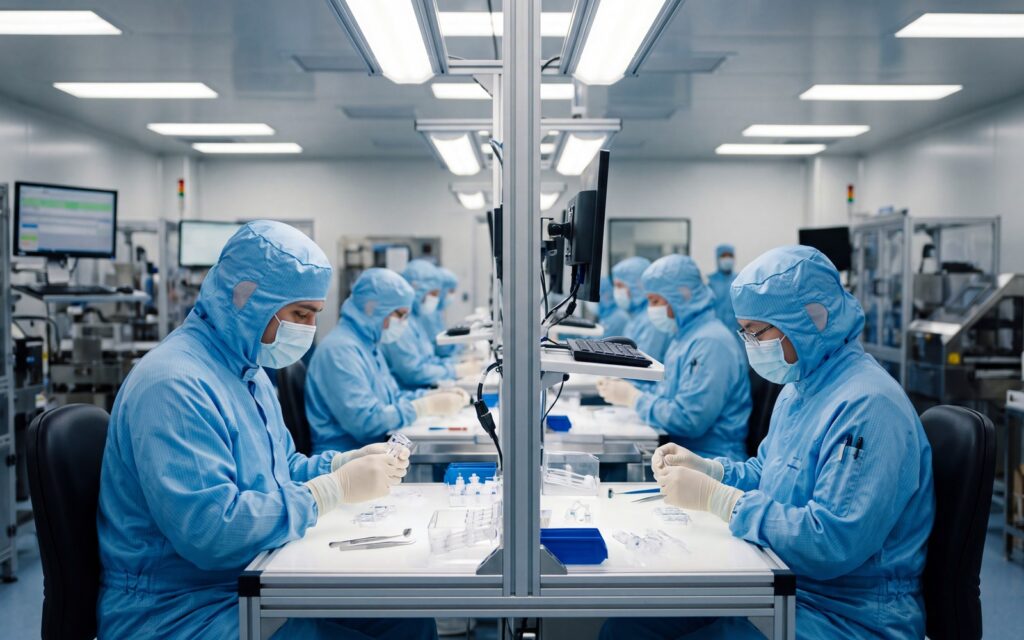
Medical products (Medical Device Class I & II) are product groups that must be produced with a strong quality management system in terms of patient safety and regulatory compliance. In the production of these devices, having an infrastructure that is compliant with ISO 13485, MDR, and Ministry of Health requirements is of fundamental importance.
Medical products (medical devices – Class I & II) are product groups that carry high responsibility in terms of patient safety and clinical performance. For this reason, the establishment of a medical device manufacturing facility involves more than just physical infrastructure; it requires a robust quality management system, complete documentation, and full compliance with regulations. Especially for Class I and II devices, legislation in the European Union and Turkey imposes an obligation on manufacturers to establish systematic and sustainable quality processes.
In this context, the turnkey medical device manufacturing facility approach provides investors and manufacturers with a safe roadmap by addressing quality, regulatory, and inspection requirements from a holistic perspective. Systems that are compliant with relevant standards, primarily ISO 13485, and that are audit-ready and traceable form the basis of competitive advantage.
Sectoral Importance of Medical Products (Medical Devices – Class I & II)
The medical device sector is a strategic area that is rapidly growing on a global scale and whose regulations are continuously updated. Although Class I and Class II medical devices are classified as low and medium-risk products, their manufacturing processes should be managed with strict quality control mechanisms.
In these product groups;
-
Product safety,
-
Traceability,
-
Clinical use suitability,
-
Market surveillance and inspection
are of critical importance. Therefore, medical product manufacturing facilities cannot create a sustainable production model without a quality infrastructure that complies with regulations.
Product and Sector-Based Subdivisions
Class I Medical Devices
Class I devices encompass low-risk products. Surgical hand tools, bandages, and simple medical equipment are examples of this group. The primary focus points in production are:
-
Basic quality controls,
-
Material suitability,
-
Traceability records,
-
Basic risk analyses (ISO 14971).
Class II Medical Devices
Class II devices fall into the medium-risk group and require more comprehensive quality systems. Diagnostic devices, infusion sets, and some active medical devices are assessed in this class. In these products:
-
Advanced risk management,
-
Process validation,
-
Performance testing,
-
Post-market surveillance
becomes mandatory.
Quality Management System and Regulatory Compliance
The quality management system forms the backbone of medical device manufacturing. Compliance with regulations is not possible without a systematic and documented structure in Class I and II medical products.
Quality System Organization
- Organization chart with clearly defined responsibilities
- Independence of the quality unit
- Competent personnel and training plans
Documentation Structure
- Quality manual
- Procedures, instructions, and forms
- Technical files and product files
- Records of change and deviation management
ISO and Regulatory Requirements
- ISO 13485: Fundamental quality standard for medical devices
- ISO 14971: Risk management
- MDR (EU 2017/745) compliance
- Requirements of the Ministry of Health of the Republic of Turkey and UTS
Audit Processes
- Internal audits
- Certification audits
- Authorized body audits
- Corrective and preventive actions (CAPA)
Advantages of the Turnkey Approach
A turnkey medical product manufacturing facility provides an integrated solution for the investor and the manufacturer. In this approach:
- The quality system and facility design are planned simultaneously,
- Regulatory risks are minimized from the start,
- Time and cost control is ensured,
- An audit-ready infrastructure is created.
Furthermore, integrating quality and regulatory consulting into the facility setup prevents non-compliances that may arise after production starts.
Qualification, Validation, and Audit Readiness Preparation
Qualification and validation in medical device manufacturing are indispensable for product safety and process consistency.
- Equipment and infrastructure qualification (IQ/OQ/PQ)
- Process validation
- Cleaning and environmental control validations
- Software validation (when necessary)
In the audit preparation process:
- Currency of documentation,
- Personnel awareness,
- Traceability of records plays a critical role.
Sıkça Sorulan Sorular
What is the main difference between Class I and Class II medical devices?
Class I devices cover low-risk products, while Class II devices are in the medium-risk group. This difference directly reflects in the depth of the quality system and technical file requirements.
Is the ISO 13485 certificate mandatory?
Yes, for companies manufacturing medical devices, ISO 13485 is a fundamental building block for regulatory compliance and is mandatory in most markets.
What does a turnkey manufacturing facility offer?
The turnkey approach reduces time losses and compliance risks by integrating quality, regulation, and facility setup.
Is MDR compliance necessary for Class I devices?
Yes, the MDR scope includes Class I devices, and manufacturers have obligations regarding technical files, risk management, and market surveillance.
How should one prepare for audits?
Keeping documentation up to date, conducting regular internal audits, and providing personnel training are the main elements of audit preparedness.
In which situations is process validation required?
Validation is mandatory for processes that cannot be verified by final product control and is especially critical for Class II devices.
Request a Quote for Your Project
Our expert team is ready to provide customized solutions for your needs.
Get in touchCatalog
You can review our catalogs for detailed information about our products and services.
Our Related Services
Related Guides
Guides on setup, costs and regulations
-
 How to Establish Medical Device Manufacturing Facilities?
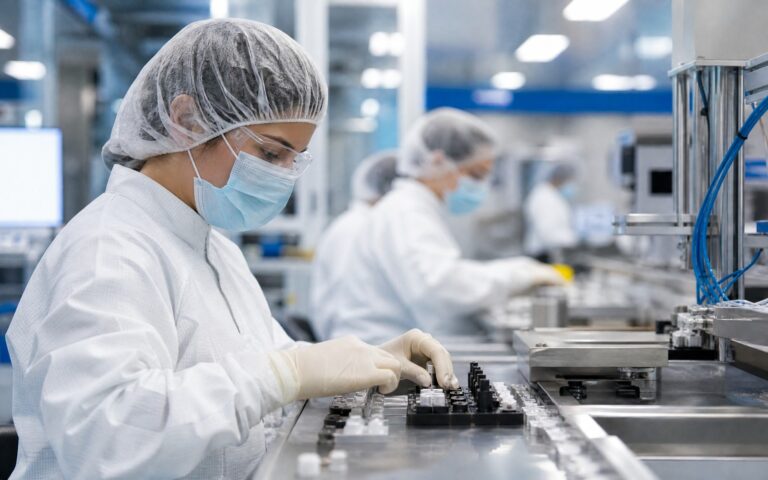
A comprehensive guide on establishing medical device manufacturing facilities, quality control processes, and regulatory compliance. Details on the…
Read more
-
 How to Set Up a Traditional Herbal Medicine Facility?
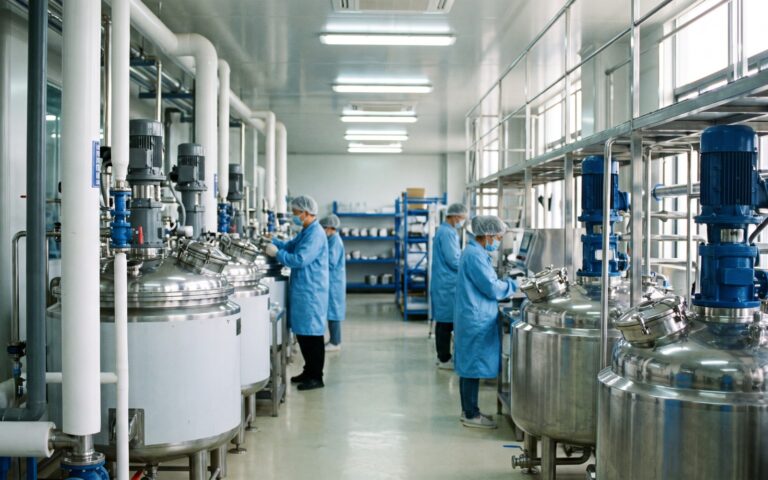
How to establish traditional herbal medicine production facilities? In this guide, explore the steps, requirements, and cost factors…
Read more
-
 How to Establish Medical Product Manufacturing Facilities?
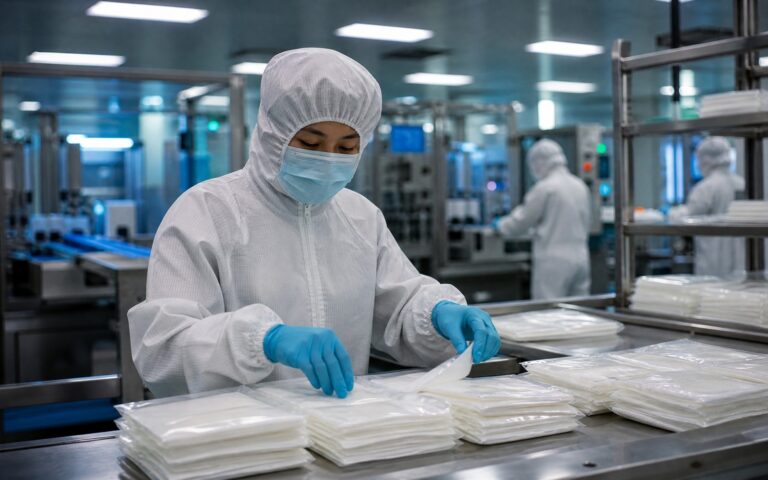
A detailed guide on the processes, requirements, and costs for the turnkey establishment of medical product manufacturing facilities.
Read more
-
 High Pressure Pumps and Energy Recovery Systems Installation
Installation steps for energy-efficient systems and the integration of high pressure pumps with energy recovery systems in drinking…
Read more