
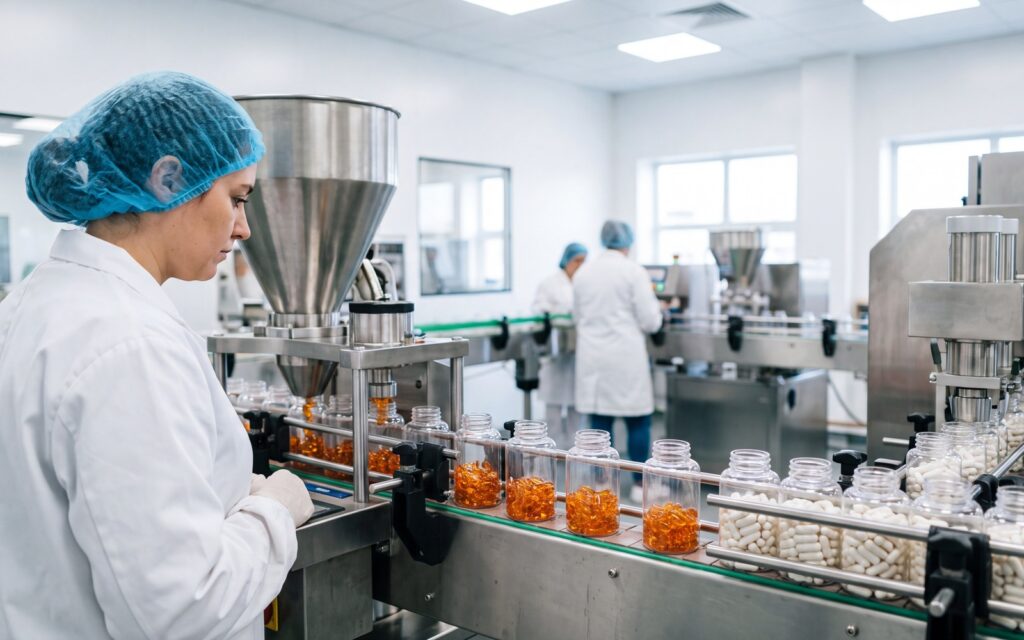
Nutritional Supplement Production
Nutritional Supplement Production is a controlled production process conducted in solid, liquid, gummy, and softgel forms in compliance with quality and regulatory requirements, directly affecting human health. Each of these production forms is addressed with different process dynamics and quality management system requirements to ensure the market introduction of safe, traceable, and inspection-ready products.
Nutritional supplement production is a field that requires high regulation in terms of food safety, traceability, and continuity of quality. These products, which include vitamins, minerals, herbal extracts, and functional components, directly affect human health, making it critical for the production processes to be designed in a controlled, standards-compliant, and inspection-ready manner.
Modern nutritional supplement facilities should be planned in compliance with GMP, HACCP, ISO 22000, and the regulations of the Ministry of Agriculture and Forestry; separate process flows for product forms, controlled areas, and a strong quality management system should support this.
The Sectoral Importance of Nutritional Supplement Production
The nutritional supplement market is a rapidly growing sector in both the domestic market and exports. This growth is not only sustainable due to product variety but also relies on a reliable production infrastructure and regulatory compliance.
For producers aiming to enter the European Union and Middle Eastern markets, designing all processes from facility design to documentation structure based on quality provides a competitive advantage.
Product-Based Nutritional Supplement Production Forms
Solid Forms
Solid form nutritional supplements include tablets, capsules, sachets, and powders. This form group is one of the most commonly used production types in terms of dosage precision and stability.
Key elements to consider in solid form production:
-
Raw material acceptance and quarantine processes
-
Cross-contamination preventive area separations
-
Homogeneous mixture and dosage control
-
Cleaning validation and traceability
The quality management system must ensure the traceability of each batch production and the consistency of processes.
Liquid Forms
Nutritional supplements in syrup, drop, spray, and beverage forms are particularly preferred by children and elderly users due to their bioavailability advantages.
Key quality aspects in liquid form production:
-
Water system quality and microbiological control
-
Homogenization and stability management
-
Packaging compatibility and sealing
-
Shelf life and storage conditions
Hygiene levels, environmental monitoring, and process validation are of great importance in these production areas.
Gummy Supplements
Gummy form nutritional supplements have rapidly become popular in recent years due to their consumer-friendly structures. However, this form requires a more sensitive approach in terms of production and quality control due to its sugar-based structure.
Key quality criteria in gummy production:
-
Formulation stability
-
Homogeneity of the gel structure
-
Humidity and temperature controlled areas
-
Microbiological risk management
In this product group, packaging and storage conditions directly affect quality as much as production does.
Softgel
Softgel products are preferred, especially for fat-soluble vitamins and active ingredients like omega-3. It is a production model that requires high technology and process discipline.
Quality management in softgel production focuses on the following aspects:
-
Control of gelatin or alternative capsule materials
-
Sealing and capsule integrity
-
Oxidation and stability tests
-
Batch-based traceability
This production type is one of the most critical nutritional supplement forms in terms of validation and process control.
Quality Management System and Regulatory Compliance
The quality management system in dietary supplement production should not only be document-based; it must be a sustainable structure that is implemented in the field and ready for inspections.
Key components:
Organizational structure and job descriptions
SOPs and documentation infrastructure
GMP, HACCP, and ISO 22000 integration
Internal audit and corrective action mechanisms
This structure builds trust in both official and customer inspections.
Advantages of the Turnkey Dietary Supplement Facility Approach
The turnkey approach ensures that the facility is activated not only physically but also in terms of quality system, documentation, and inspection readiness.
Key advantages:
Regulatory compliant startup
Time and cost optimization
Single-source coordination
Inspection-ready production infrastructure
This approach is a strategic solution, especially for new investors and companies aiming for export.
Qualification, Validation, and Preparation for Inspection
Qualification and validation studies in dietary supplement facilities form the basis of production reliability. Equipment, process, and cleaning validations support the continuity of product quality.
At the same time, these studies ensure that the facility is strongly represented during inspections by the Ministry of Agriculture and Forestry and customer inspections.
Sıkça Sorulan Sorular
Is GMP mandatory for dietary supplement production?
For dietary supplements, GMP is a legally recommended but practically expected standard in inspections.
Can gummy and softgel production be done in the same facility?
Yes, but process and area separations must be designed correctly.
Is a separate production area required for liquid and solid forms?
Separate areas are recommended to prevent cross-contamination risks.
When should quality documentation be created?
It should be prepared before the facility is activated and actively used with production.
Are there additional requirements for export?
Additional regulations and certifications may be required depending on the target country.
Request a Quote for Your Project
Our expert team is ready to provide customized solutions for your needs.
Get in touchCatalog
You can review our catalogs for detailed information about our products and services.
Our Related Services
- Medical Products Medical Devices (Class I & II)
- Clean Room Setup
- Cosmetic Production Facilities
- Turnkey Production Facilities
- FDA Inspection Consulting
- Aromatherapy Production Facilities
- Biocidal Product Production
- Human, Veterinary and Traditional Herbal Medicine Production
- HACCP Consulting
- GMP Consulting
Related Guides
Guides on setup, costs and regulations
-
 How to Set Up a Supplement Production Facility for Energy?
A comprehensive guide on the setup process, requirements, costs, and common mistakes for establishing a supplement production facility…
Read more
-
 How to Establish a Food Supplement Production Factory?
A comprehensive guide on the processes, requirements, and costs of establishing a food supplement production factory.
Read more
-
 How to Establish a Herbal Supplement Production Factory?
Get detailed information about the establishment processes, requirements, and costs of a herbal supplement production factory.
Read more
-
 How to Establish a Detergent Production Factory?
A detailed guide on the process of setting up a detergent production factory, sector requirements, costs, and common…
Read more