
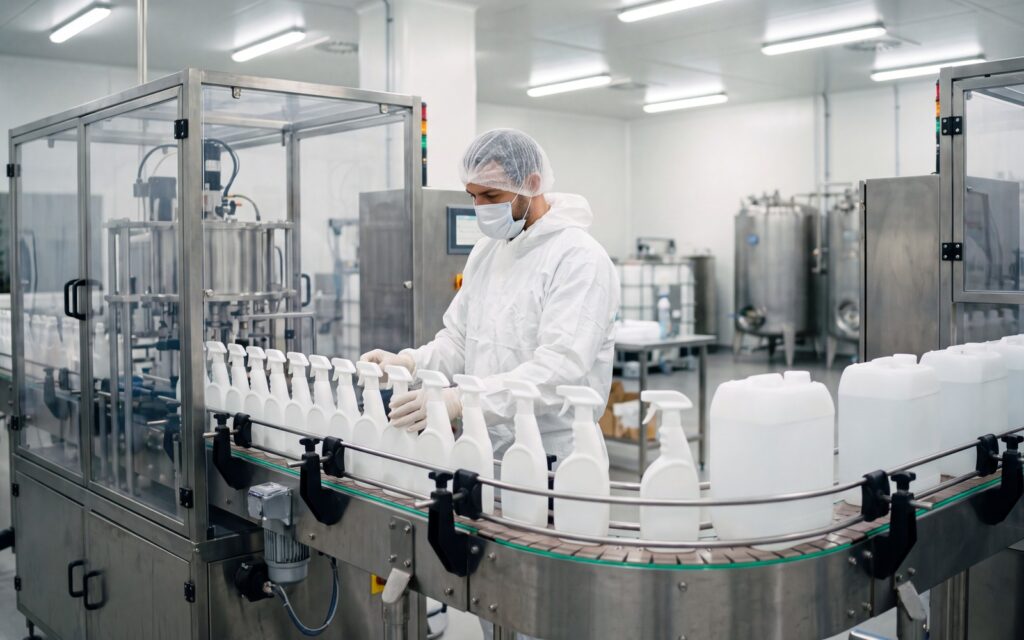
Biocidal Product Production
Biocidal product production is a critical manufacturing field based on strict regulations and a strong quality management system aimed at protecting human health and environmental safety. The turnkey approach enables compliant and sustainable production by integrating quality, documentation, and inspection requirements.
Biocidal product production is a strategic industry that involves the controlled, traceable, and fully compliant production of disinfectants, antiseptics, pest control products, and similar products used to protect human health and the environment. Companies wishing to operate in this field must not only engage in production but also ensure a strong quality management system, comprehensive documentation structure, and full compliance with regulations.
The European Union Biocidal Products Regulation (BPR) requires biocidal product manufacturing facilities in Turkey to be designed and operated with a focus on quality, safety, and sustainability, as per the requirements of the Ministry of Health and relevant authorities. Therefore, biocidal product manufacturing is a process that requires high expertise and should be approached as a turnkey facility solution.
The Sectoral Importance of Biocidal Product Production
Biocidal products play a critical role in many different sectors such as health, food, industry, public spaces, and individual use. Especially during pandemic periods and with the increasing awareness of hygiene, the demand for biocidal products has risen significantly. This increase has created higher expectations for manufacturers in terms of both capacity and quality.
For companies seeking to establish a sustainable presence in the sector, compliance with GMP-like good manufacturing practices, an effective quality management system, and readiness for inspections at all times provide a competitive advantage. Biocidal product production is an activity that carries not only commercial but also social responsibility dimensions.
Product and Form-Based Production Approaches
Biocidal product production is carried out in various pharmaceutical and chemical forms according to different areas of use. These forms require special approaches in terms of quality systems and process control.
Liquid Forms
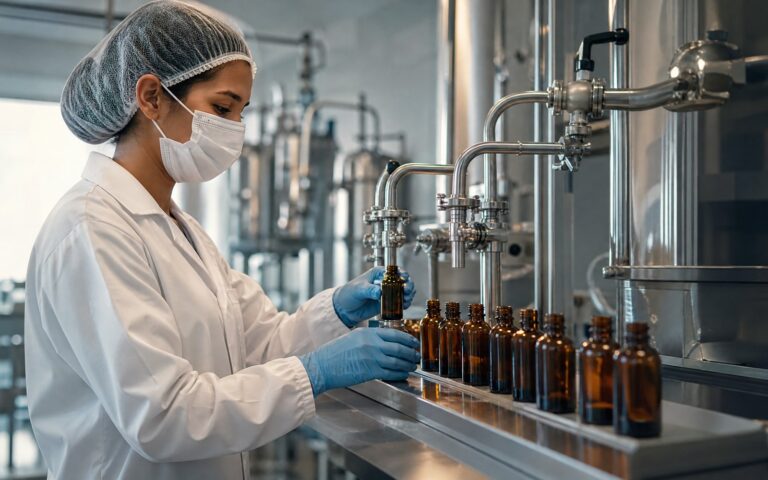
Disinfectants, antiseptic solutions, and surface cleaners are the most common liquid forms of biocidal products. In the production of these products, homogeneity, active substance stability, and microbiological control are of great importance. The quality management system in liquid form production necessitates the continuous monitoring and recording of process parameters.
Semi-Solid Forms
Biocidal products in gel, cream, and ointment form are primarily used in skin applications. The suitability of raw materials, management of cross-contamination risks, and product stability are key focal points of the quality system for these forms. Semi-solid forms require meticulous handling of validation and cleaning verification processes.
Quality Management System and Regulatory Compliance
The success of biocidal product manufacturing is directly related to the establishment of a strong Quality Management System (QMS). This system should be built on the principles of product safety, legal compliance, and continuous improvement.
Within the quality system organization:
- Clear definition of responsibilities and authorities
- Adoption of a risk-based approach
- Change management and deviation control
The documentation structure should be holistic, encompassing procedures, instructions, records, and validation documents. In facilities producing biocidal products, compliance with the specific requirements of the Ministry of Health and EU-BPR must be ensured alongside management systems such as ISO 9001, ISO 14001, ISO 45001.
Audit processes aim to continuously measure the effectiveness of the quality system through both internal and external audits. A structure ready for audit allows the manufacturer to position itself as a reliable stakeholder in the industry.
Advantages of the Turnkey Approach
Turnkey biocidal product manufacturing facilities ensure that the establishment of the quality management system is integrated with the production infrastructure.
Thanks to this approach:
- A regulatory compliant structure is established from the start
- Documentation and quality processes progress in parallel with production
- Time and cost losses are minimized
The turnkey approach offers a strategic advantage, especially for new investors and companies aiming for capacity increase.
Qualification, Validation and Audit Readiness
Qualification and validation studies in biocidal product manufacturing demonstrate the suitability of the facility and processes for their intended use. Equipment qualification, process validation, and cleaning validation are the essential components of this process.
Audit readiness requires continuity. Thanks to up-to-date documentation, trained personnel, and traceable record systems, facilities are always in a state of readiness for official authorities and customer audits.
Sıkça Sorulan Sorular
Which regulations must be complied with for biocidal product manufacturing?
In Turkey, the Ministry of Health regulations are fundamental, while in the European Union, BPR is the basic regulation. Additionally, ISO standards support the quality system.
Is GMP mandatory in biocidal product manufacturing?
Although GMP is not strictly mandatory, compliance with GMP principles provides significant advantages regarding quality and auditing.
What does a turnkey biocidal production facility provide?
The facility offers a fast and safe start by ensuring the integrated establishment of the quality system and documentation.
Why are validation processes important?
Validation proves that the product is produced safely and consistently and forms the basis of legal requirements.
How is audit readiness ensured?
Audit readiness is achieved by continuously updating documentation, employing trained personnel, and implementing effective internal audits.
Request a Quote for Your Project
Our expert team is ready to provide customized solutions for your needs.
Get in touchCatalog
You can review our catalogs for detailed information about our products and services.
Our Related Services
- GMP Consulting
- Cosmetic Production Facilities
- FDA Inspection Consulting
- Turnkey Production Facilities
- Nutritional Supplement Production
- Clean Room Setup
- HACCP Consulting
- Aromatherapy Production Facilities
- Medical Products Medical Devices (Class I & II)
- Human, Veterinary and Traditional Herbal Medicine Production
Related Guides
Guides on setup, costs and regulations
-
 How to Establish Biocidal Product Manufacturing Facilities?
Get detailed information about the establishment of biocidal product manufacturing facilities, sectors, and products. Explore processes related to…
Read more
-
 How to Establish a Detergent Production Factory?
A detailed guide on the process of setting up a detergent production factory, sector requirements, costs, and common…
Read more
-
 How to Establish a Protein Powder Production Facility?
What steps should be taken in establishing a protein powder production facility? Get information about quality management systems,…
Read more
-
 How to Establish Aromatherapy Production Facilities?
A detailed guide on the processes and requirements for establishing aromatherapy product production facilities. All steps related to…
Read more